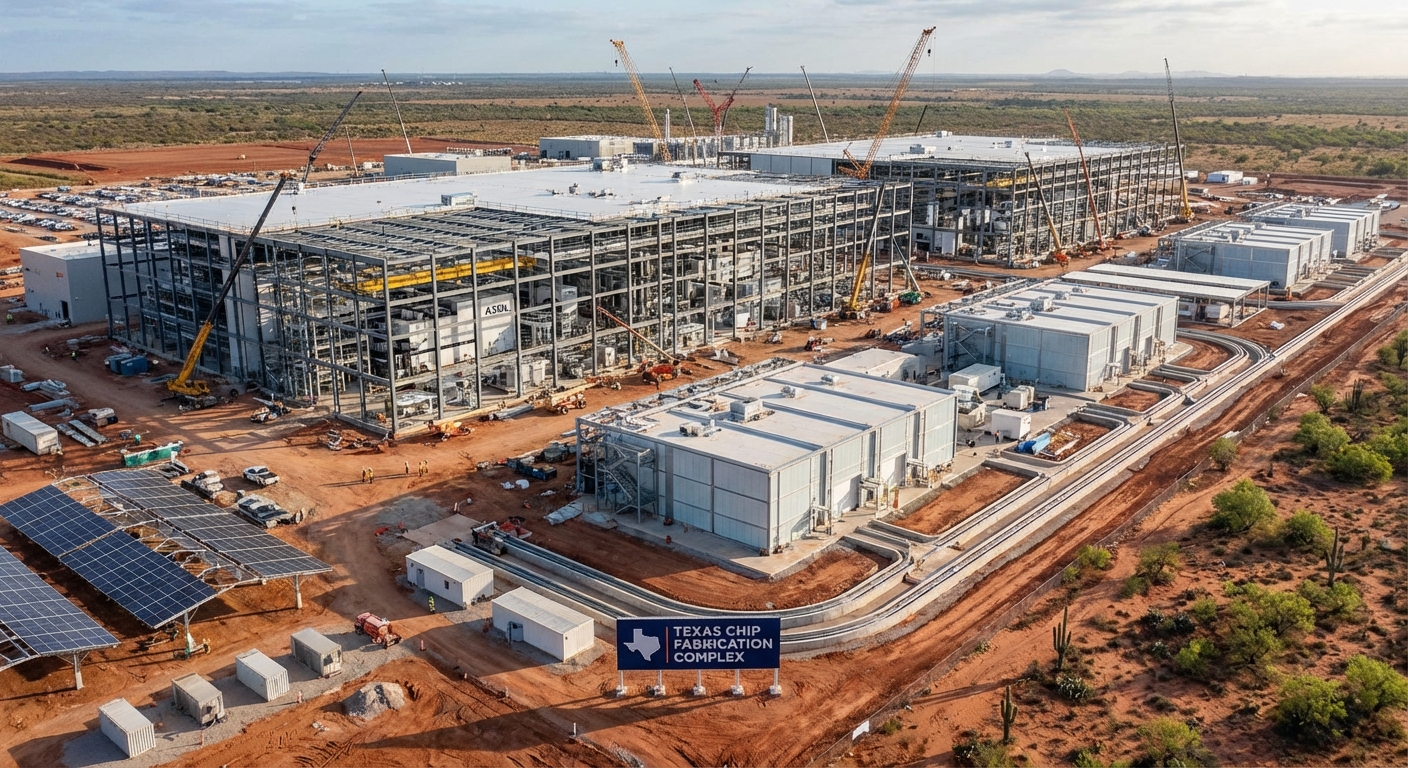
Intel just announced it's joining Elon Musk's Terafab project, teaming up with SpaceX, Tesla, and xAI in what promises to be one of the most ambitious semiconductor factories in history. The announcement, made on April 7, 2026, represents a monumental strategic move for both Intel and Musk's ecosystem.
What Is Terafab
Terafab is Musk's mega AI chip manufacturing project, confirmed in March 2026. The plant will be built in Austin, Texas, with a goal that sounds like science fiction: producing 1 terawatt per year of compute capacity. To put that in perspective, we're talking about a production scale that would surpass many current factories combined.
The project was born from Musk's need to secure his own chip supply for his multiple companies: xAI needs processors to train AI models, Tesla requires them for autonomous vehicles and humanoid robots, and SpaceX plans to use them in satellites and its ambitious space data center project.
Why Intel Is the Missing Piece
When Musk originally announced Terafab with just SpaceX and Tesla, the industry raised an eyebrow. Building a semiconductor fab is one of the most complex and expensive infrastructure projects out there — typically requiring more than $20 billion and years of development. Neither SpaceX nor Tesla have chip manufacturing experience.
Intel solves that equation. As the company said: "Our ability to design, fabricate, and package ultra-high-performance chips at scale will help accelerate Terafab's aim to produce 1 TW/year of compute to power future advances in AI and robotics."
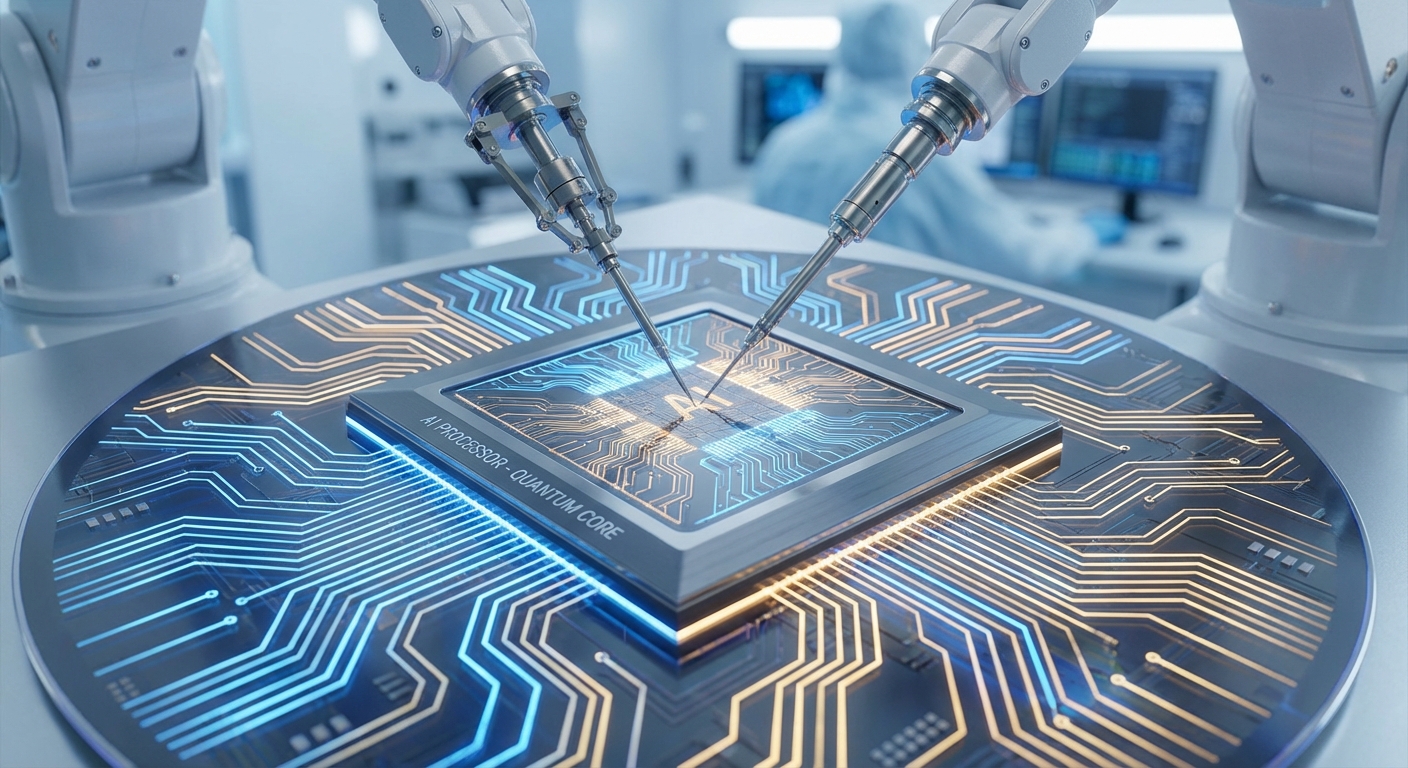
Intel brings decades of semiconductor manufacturing experience, state-of-the-art clean rooms, and the precision machinery required. It's exactly what a project of this magnitude needed.
The Implications for Intel
For Intel, this deal is potentially a lifeline. The company that was once the undisputed leader in U.S. semiconductors has watched Nvidia and AMD seize the lead in advanced processors, while companies like TSMC dominate manufacturing. The "fabless" model — where you design chips but someone else manufactures them — became the norm, leaving Intel in an awkward position.
Intel's foundry business needed large anchor customers. Now it has two: SpaceX and Tesla. Intel stock rose more than 3% on the announcement, closing at $52.28.
For the Semiconductor Industry
This move has important geopolitical implications. The West's dependence on TSMC (Taiwan) for advanced chip manufacturing has been a strategic concern for years. Terafab, with Intel as manufacturing partner, represents a step toward repatriating semiconductor production capacity to American soil.
However, many questions remain. The exact scope of Intel's contribution is unclear, the financial details of the agreement haven't been revealed, and building a fab from scratch remains an enormous challenge even for the most experienced players.
For Musk's AI Projects
xAI, Musk's artificial intelligence company that operates Grok, is perhaps the biggest beneficiary. Having access to custom-manufactured chips without depending on Nvidia gives it a significant competitive advantage in the AI race. Tesla, for its part, could have processors specifically optimized for its Optimus robots and autonomous driving system.
If investors expected Terafab to be a greenfield approach based on SpaceX's and Tesla's unique engineering approach, that probably won't materialize. Intel brings a proven, not experimental, approach. That may be less exciting, but it's significantly more realistic.
The convergence between AI, robotics, and proprietary hardware manufacturing is something that seemed distant just a few years ago. That Intel, a company with decades of history, is jumping on Musk's train speaks to how quickly the landscape is changing. The question is whether this will actually change who controls the chip supply chain, or if it's another grandiose announcement that fizzles over time. With Musk, it's always hard to tell.