The National Transportation Safety Board was forced to temporarily block public access to its docket system after users successfully reconstructed cockpit voice recordings of deceased pilots using artificial intelligence applied to spectrogram images. This is not a science fiction scenario or a distant warning: it happened, and the regulator had to act in emergency mode to contain the damage. The NTSB routinely publishes documentation from its accident investigations, including visual representations of black box audio, because the actual audio is protected under federal law. What nobody anticipated seriously enough is that those images, seemingly innocuous, could become raw material for resurrecting voices.
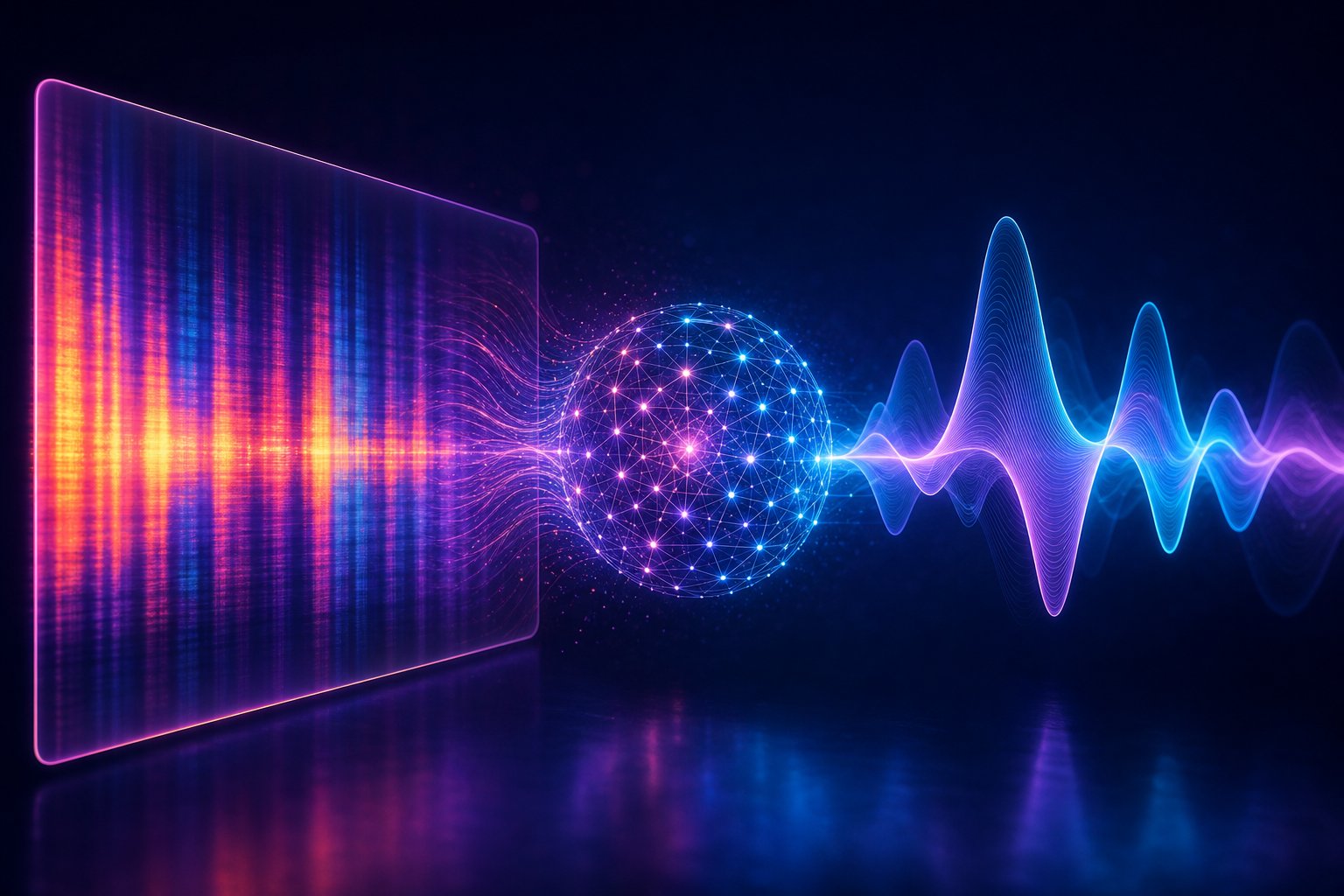
The method: from image to voice
A spectrogram is, in simple terms, a photograph of sound. It displays frequencies, intensities, and duration as a visual map. For decades, sharing spectrograms instead of audio files was considered sufficient to comply with legal restrictions without sacrificing investigative transparency. The logic was reasonable: nobody can "listen" to an image. But that logic was built in an era where reversing that process required resources beyond the reach of any non-institutional actor.
Today, audio reconstruction models based on deep learning can take a high-resolution spectrogram and generate an approximation of the original audio with fidelity sufficient to distinguish words, emotional tones, and in some cases individual voices. It is not perfect, but it is good enough to be disturbing. And good enough for the NTSB to consider it a violation of the spirit — if not the letter — of existing legal protections.
Why the law protects those recordings
Cockpit Voice Recorder recordings are protected in the United States under the Federal Aviation Act precisely because they contain private conversations between crew members, many of them in the final moments of those people's lives. The law pursues two goals: protect the privacy of the deceased and their families, and ensure that pilots are not afraid to speak freely in the cockpit knowing their words could become public. If pilots know that anything they say could end up in a YouTube video with sensationalist headlines, the effect on aviation safety is real and measurable.
The NTSB does not publish the audio. It publishes partial transcripts and, in some cases, spectrograms. Or it used to.
The gap nobody closed in time
Here is the crux of the problem: the regulation was written for a world where audio and image were separate and irreversible categories. AI collapsed that separation. It is not the first time this has happened — we already saw how language models dissolved the distinction between "public data" and "private profile," or how deepfakes erased the line between recording and fabrication — but every time it happens, the regulatory system arrives late, reacts in emergency mode, and then spends months or years trying to catch up.
What the users who reconstructed these recordings did is not necessarily illegal under current regulations. They took public images and applied public tools. The result is what makes people uncomfortable, not the process. And that is exactly the kind of legal vacuum that regulators hate because they do not quite know how to close it without banning general-purpose technology.
The implications go beyond aviation
If this works with black box spectrograms, it works with any spectrogram published in any context. Court recordings, journalistic interviews presented in visual format, medical evidence from voice therapy, academic research archives. The attack vector — if we want to call it that — is not specific to aviation. Aviation was simply the first context where someone tried it with material sensitive enough to force a visible institutional response.
For the audio world in general — and this directly touches the territory of osky.dj — the news has an additional reading: the voice is increasingly less a secure identifier and increasingly more a reconstitutable data point. The implications for vocal image rights, voice usage licenses, and the protection of artists' sonic identity are enormous and are only just beginning to be seriously discussed in relevant legal forums.
What comes next
The NTSB restored access to its docket system after the temporary block, but without the compromised spectrograms. The agency has not publicly detailed what changes it will implement in its document publication policy. Most likely we will see a combination of more aggressive redaction of audio images, a review of what spectrogram resolution is "safe" to publish, and possibly lobbying to update the federal legislation governing access to CVRs.
What will not happen is the technology rolling back. The models enabling this reconstruction are public, improving every quarter, and require no specialized infrastructure. The race between technical capability and regulatory framework has been unequal for years, and this case is just the most recent — and most dramatic — example of that gap.