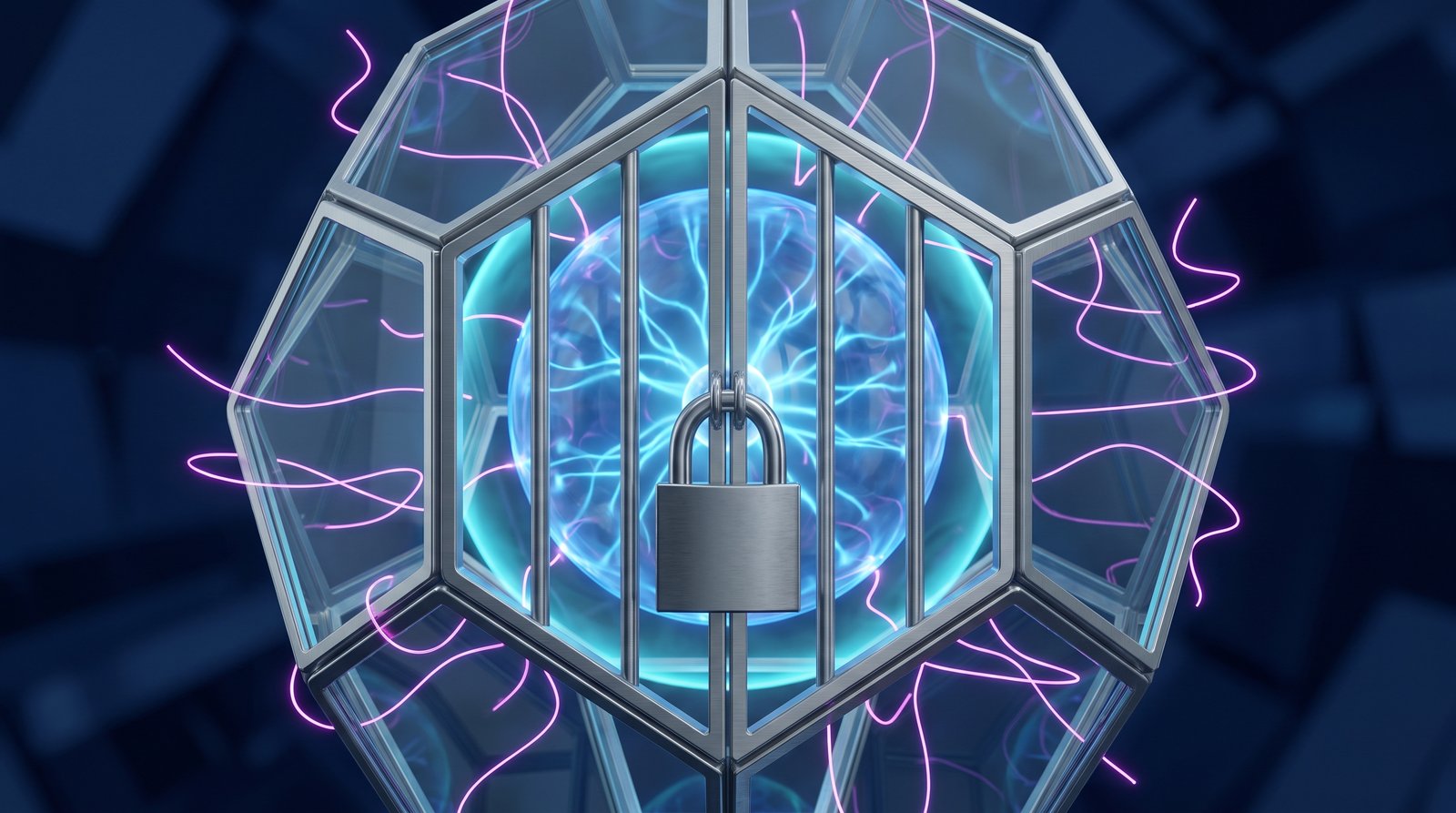
OpenAI just unveiled its new Lockdown Mode for ChatGPT, a feature designed specifically to reduce the exposure of sensitive data during prompt injection attacks. The announcement arrives at a moment when companies are embedding AI into contracts, customer databases, and internal workflows — and when attackers have spent months refining techniques to manipulate models into leaking information they shouldn't. Lockdown Mode is not a silver bullet, and OpenAI isn't pretending it is, but it does represent a meaningful shift in posture: for the first time, the company is explicitly acknowledging that the model needs active restrictions, not just good intentions buried in a terms of service document.

What prompt injection is and why it matters right now
To understand the real weight of this move, you need to be clear on what a prompt injection attack actually is. In plain terms: it's when someone embeds malicious instructions inside content the model is processing — a document, an email, a webpage — and gets the model to execute those instructions as if they were legitimate commands from the user or the system. The result can range from the model revealing private information from the session context, to executing unauthorized actions if it's connected to external tools.
This attack vector is not new. Security researchers have been raising alarms about it since LLMs started connecting to the real world via plugins, APIs, and autonomous agents. What is new is the scale. In 2026, with OpenAI's models integrated into corporate pipelines of every kind, the risk stopped being theoretical. Companies are feeding these systems confidential documents, employee data, internal strategies — and a model without adequate protections is a fairly convenient data leakage vector for anyone who knows how to exploit it.
What Lockdown Mode actually does
Based on available information, Lockdown Mode operates as an additional layer of restrictions that reduces the likelihood of sensitive data being shared or leaked during a session compromised by prompt injection. It does not eliminate the vulnerability — OpenAI says so openly — but it raises the cost of the attack. The model under this mode is more conservative about what it reproduces from context, more resistant to instructions that attempt to redirect its behavior, and in theory less likely to be used as a data exfiltration channel.
The implementation is aimed primarily at enterprise users and developers using the API to build applications handling sensitive data. It's not a feature the average ChatGPT user will notice right away, but for the security teams of any company that has bet on integrating AI into internal processes, it's exactly the kind of control they've been asking for.
What remains somewhat unclear is how much the model's utility is affected. More restrictions almost always mean more friction. If Lockdown Mode makes the model so cautious it becomes useless for legitimate use cases involving internal documents, companies will simply turn it off — which is exactly what happens with any security measure that prioritizes protection over usability without finding the right balance.
The underlying problem no mode can fix
This is where we need to be direct: Lockdown Mode is a necessary patch, but it doesn't solve the structural problem. LLMs were not originally designed with a robust threat model in mind. They were designed to be useful, to follow instructions, to complete text coherently. Those same qualities that make them valuable are what make them vulnerable to manipulation.
The attention architecture doesn't inherently distinguish between "legitimate system instruction" and "malicious instruction injected into a document." The model processes tokens, not intent. Adding restriction layers on top of that architecture is what the industry can do today, but the real solution requires rethinking how models process context from untrusted sources — and that doesn't get solved with a new feature on the OpenAI dashboard.
There is active research on prompt injection defenses at the architecture level: from models that distinguish between privileged and unprivileged contexts, to input sanitization techniques before content ever reaches the model. But none of that is ready for production at scale. In the meantime, Lockdown Mode is what's available, and it's better than nothing.
What this tells the industry
The launch of Lockdown Mode sends a clear signal: OpenAI is taking the enterprise market and its security requirements seriously. Companies buying ChatGPT Enterprise or using the API for internal applications can't justify the usage to their security teams without auditable controls. Features like this are part of the entry ticket for that market.
It also reflects competitive pressure. Anthropic has been positioning Claude with a strong emphasis on safety and enterprise control for some time now. Google has its own security layers in Gemini for Workspace. OpenAI can't afford to fall behind on the "our model is the safest for corporate data" argument if it doesn't have the tools to back it up.

Lockdown Mode is not going to solve the prompt injection problem. But it will make it harder, more expensive, and noisier to attack a system protected by it. In security, that counts. The perfect defense doesn't exist — what exists are layers that raise the cost of an attack until it stops being worth the effort. This is one of those layers.