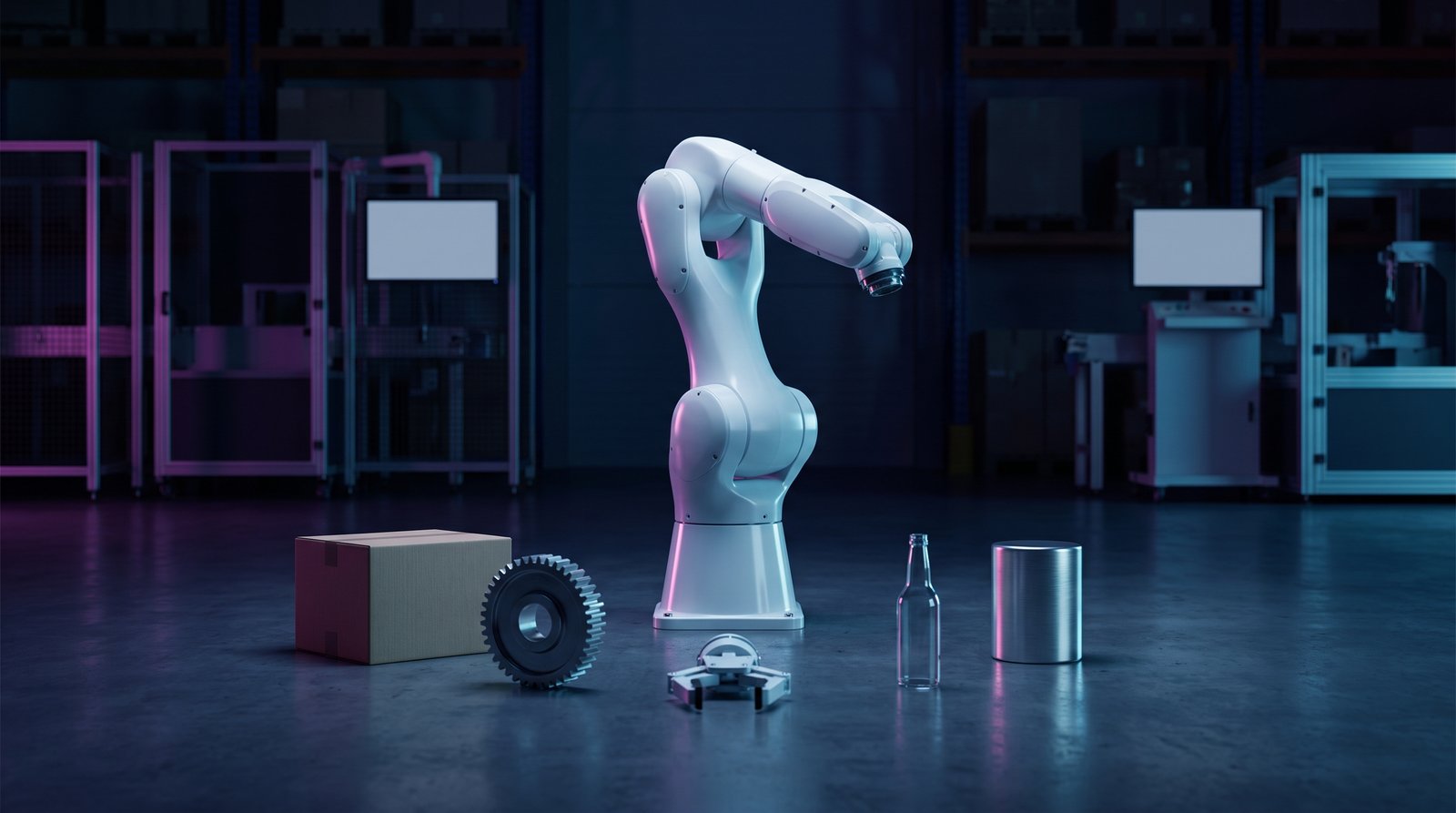
Industrial robotics has been stuck in the same paradigm for decades: you design a robot to do one thing, install it on a production line, and there it stays until the line changes or the robot dies. It was a model that worked fine when factories produced the same product for twenty consecutive years. Today, with supply chains that reconfigure every quarter and demand that shifts faster than any traditional manufacturing cycle, that model is starting to look like a dinosaur with WiFi. Theker, an industrial robotics startup, just closed an $85 million round with a proposal that sounds simple but implies a complete philosophical shift: build the robot that specializes in nothing.
The problem with robots that only know how to do one thing
Boston Dynamics, FANUC, ABB — all the big names in industrial robotics share the same design logic: fixed form, optimized function. A welding robotic arm is extraordinarily good at welding. A display assembly robot is incredibly precise at assembling displays. The problem is that they're practically useless outside that context. When the production line changes — and in modern manufacturing, it changes constantly — the robot becomes expensive metal that gets in the way.
Humanoids are the most obvious answer to this problem, and in recent years they've received disproportionate media attention. The logic is seductive: if the world is designed for human bodies, a human-shaped robot should be able to move through it without redesigning the factory. But humanoids bring their own problems: they're mechanically complex, energetically inefficient, expensive to maintain, and still far from having the reliability that real industrial environments demand, where downtime costs money in real time.
Theker bets on reconfigurability, not on form
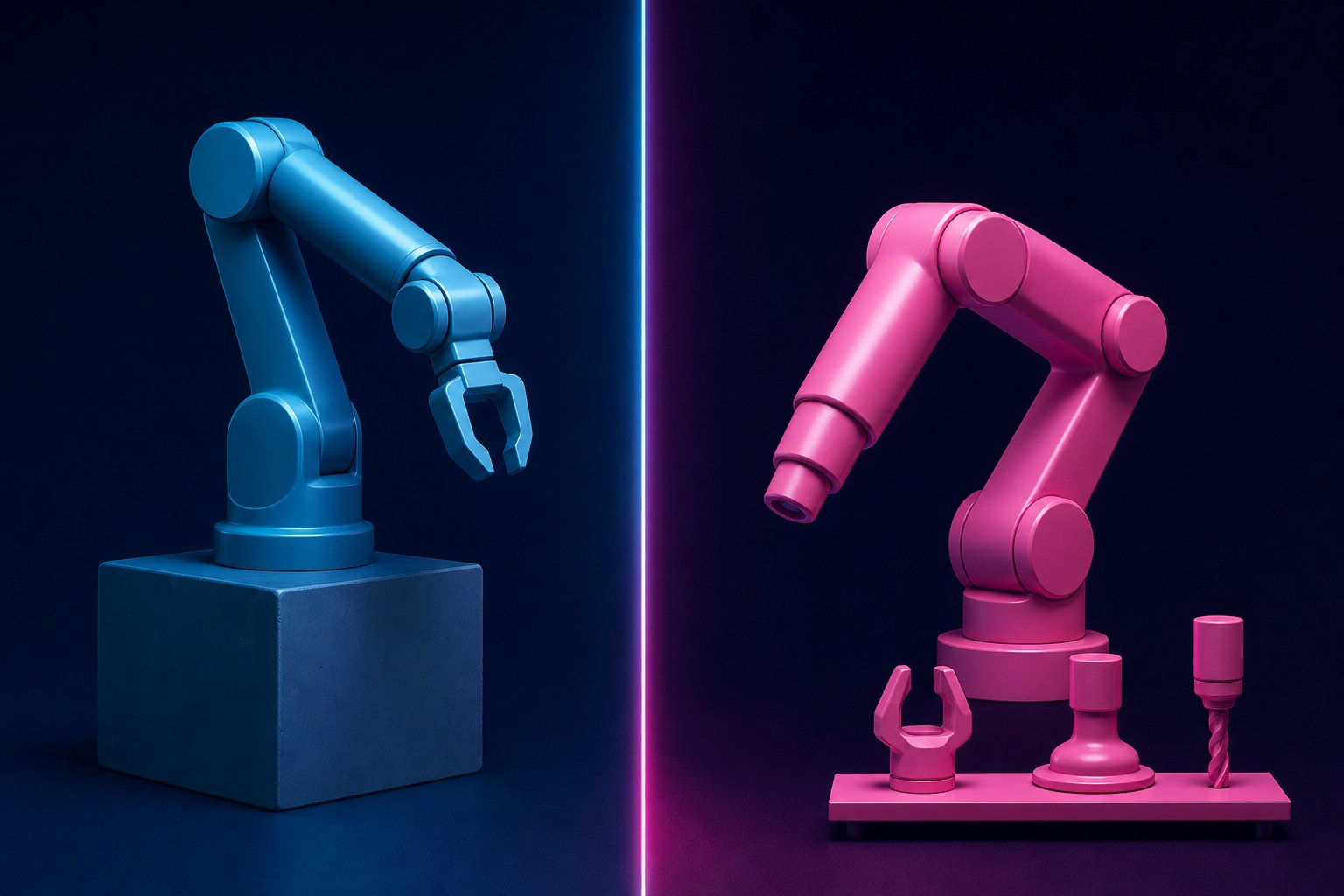
What Theker proposes is different. Its machines don't have a fixed form and don't try to mimic human anatomy. They're designed to be reconfigured — physically, not just at the software level. The idea is that the same mechanical system can adapt to different tasks according to the needs of the production line, without needing to buy a new robot for each application.
This touches a real nerve in modern manufacturing. Factories that produce for multiple brands, that handle variable SKUs, or that operate under short-term contracts can't afford to invest in ultra-specialized robots with five or seven-year return on investment cycles. They need flexibility. And flexibility, until now, has been the Achilles' heel of industrial automation.
The $85 million raised in this round — whose exact investor composition hasn't been fully disclosed — will go primarily toward hardware development and scaling Theker's own manufacturing capacity. It's not a modest amount for a robotics startup: building hardware is expensive, development cycles are long, and the margin for error in industrial environments is minimal.
Why this matters beyond the hype
There's an angle that typical tech coverage tends to ignore when talking about industrial robotics: the impact on the workforce isn't binary. It's not simply "robots replace workers." The reality on factory floors is more nuanced. The jobs most affected by traditional automation have been the repetitive and physically demanding ones — exactly the jobs specialized robots do well. The jobs that have survived are those requiring adaptability, situational judgment, and the ability to respond to the unexpected.
A reconfigurable robot like the one Theker proposes doesn't just expand which tasks can be automated — it also changes the type of skills workers need to coexist with automation. If the robot can switch tasks, someone has to configure it, supervise it, and make decisions about when and how to reconfigure it. That creates a different work profile than the traditional line operator.
The timing is relevant
We're at a point where global manufacturing is under simultaneous pressure from multiple directions: aggressive nearshoring driven by geopolitical tensions, labor shortages in developed economies, and cost pressure that gives no quarter. Companies bringing production back to the United States or Europe aren't doing it to pay local wages on labor-intensive production lines — they're doing it assuming automation will absorb much of the labor cost.
In that context, a flexible, reconfigurable robot isn't just an interesting product — it's potentially a piece of critical infrastructure for making nearshoring economically viable at scale. If Theker can demonstrate that its technology works under real production conditions, $85 million may look, in retrospect, like a bet that was worth every cent.
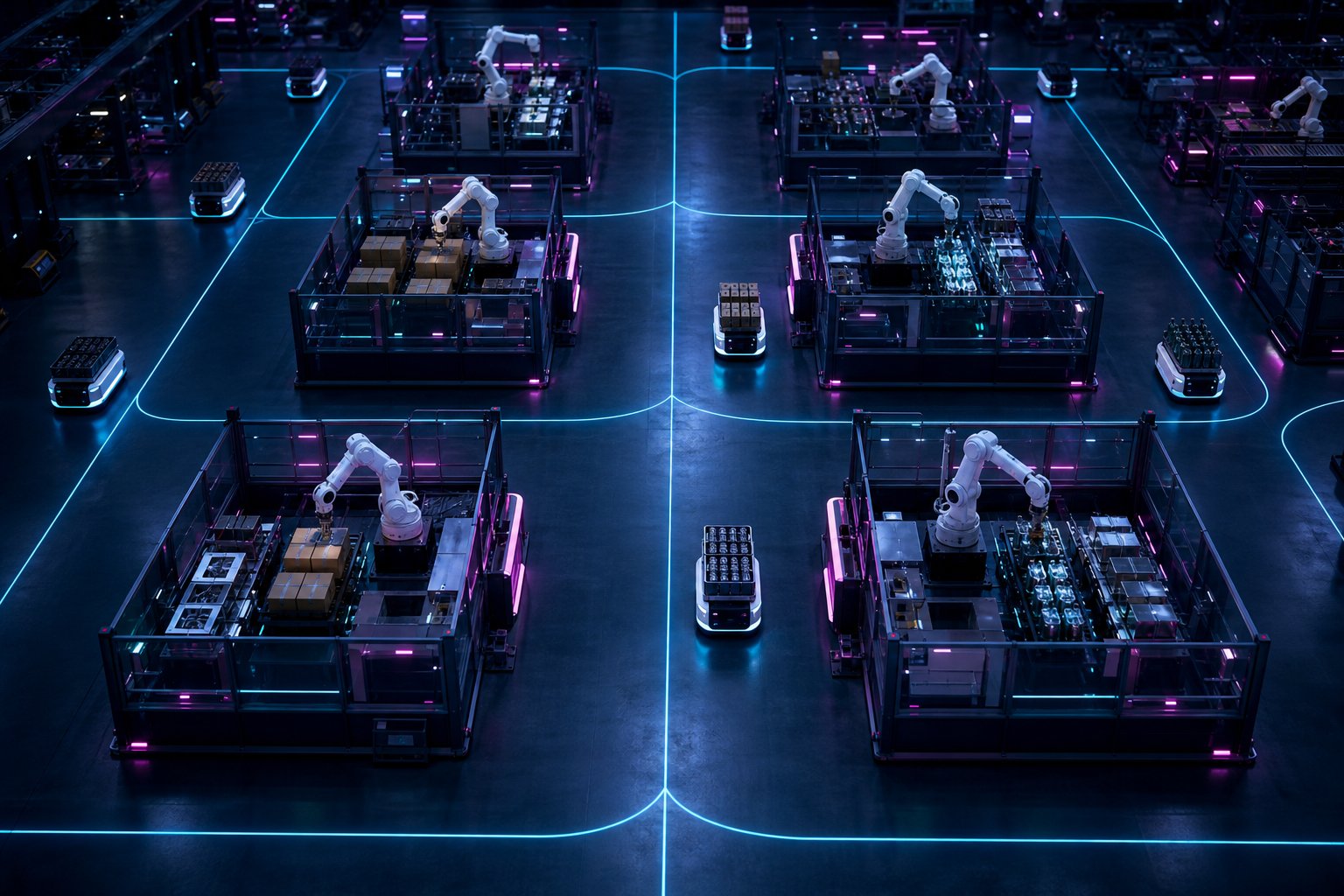
The question that remains open — as always in robotics — is the gap between the lab and the factory floor. That gap has buried startups more promising than Theker. The round is closed. Now the hard part begins.