
Image-Line released FL Studio 2026 and with it comes an update that, while not reinventing the wheel, proves the company is reading the room more carefully than most of its competitors. Three major moves define this version: a completely redesigned FLEX synthesizer, automatic cloud backup, and a smart assistance system integrated directly into the interface. These are not cosmetic patches. They are decisions that point to a user who no longer lives exclusively in their studio — who works from a laptop at a coffee shop, from a hotel, from wherever life takes them — and who cannot afford to lose a project because a hard drive died at the wrong moment. FL Studio has spent years operating under the most generous licensing model in the DAW market: pay once, free lifetime updates. With this version, Image-Line continues to bet that this philosophy earns long-term loyalty in a world where competing tools charge monthly just to keep your projects accessible.
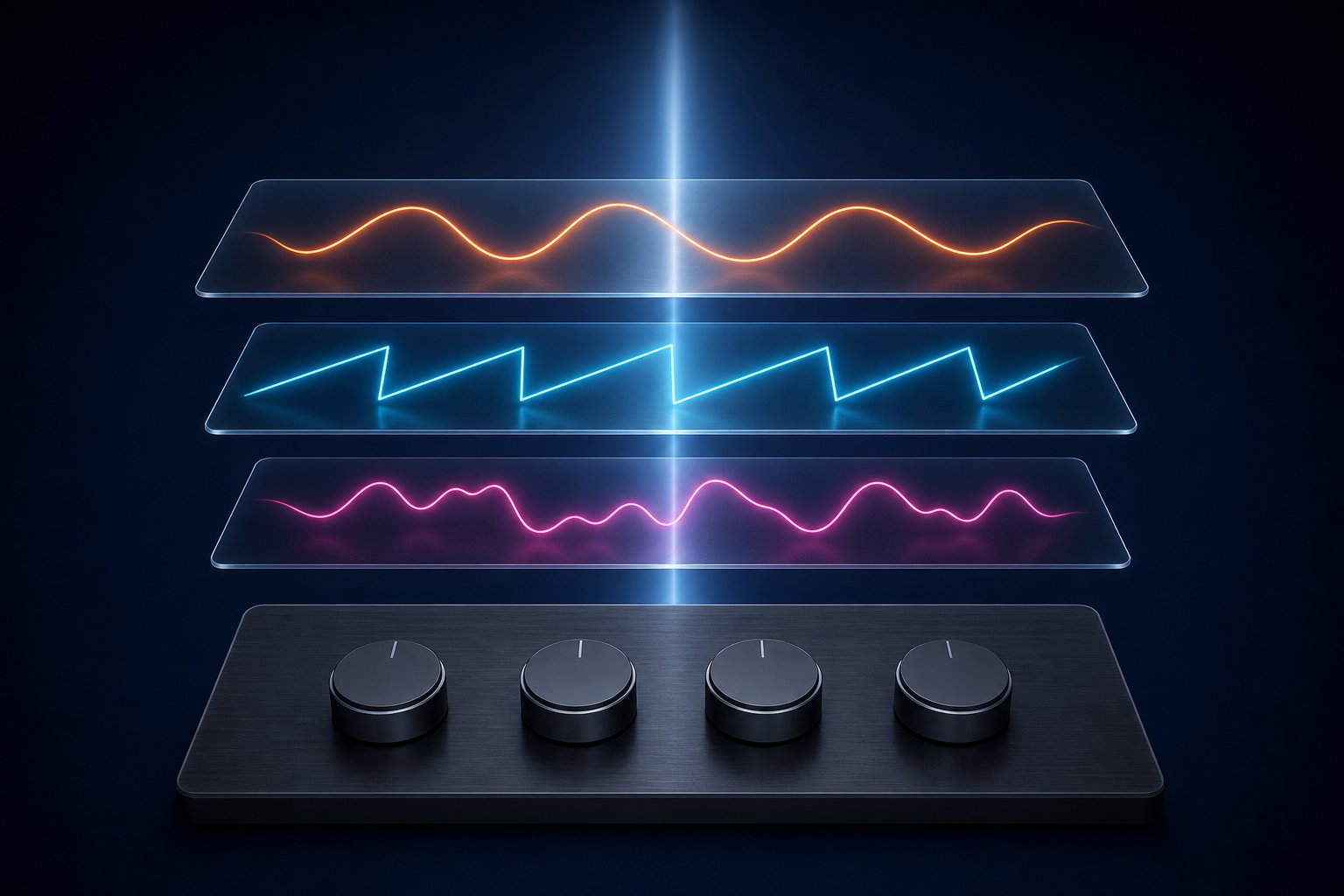
FLEX stops being a second-tier synthesizer
When FLEX debuted in 2019, many producers saw it as a glorified preset player: useful for beginners, skippable for anyone with an established plugin arsenal. That perception was not entirely unfair. But the redesigned version in FL Studio 2026 changes the conversation. The interface was rebuilt from scratch with workflow in mind: faster preset navigation, clearer layer visualization, and modulation controls that previously required jumping between screens are now accessible from the main view. It is not Serum or Vital, nor does it try to be. FLEX was always the entry point — the tool that tells a new producer "you can start here without getting overwhelmed" — and that entry point is now considerably less frustrating. For producers working in trap, reggaeton, and urban pop who build their sessions around well-curated presets, a more agile FLEX is not a minor detail. It is the instrument they use most.
Cloud backup as a safety net, not a gimmick
The cloud backup integration is perhaps the quietest but most practical addition in this release. FL Studio 2026 incorporates automatic project synchronization without requiring the user to leave the application or configure third-party services. To understand why this matters, consider the real profile of the average FL Studio user: not the engineer with a RAID array and automated daily backups, but the 17-year-old in Monterrey producing on a three-year-old Windows laptop, or the beatmaker in Mexico City sharing a computer with a sibling. Those users lose projects. Constantly. A built-in backup system that simply works without requiring the user to think about it is exactly the kind of solution the industry should have normalized years ago. The practical detail worth watching is how much storage the base license includes and whether Image-Line layers a premium subscription on top — something that would sit in direct tension with their historical "pay once" philosophy.
Smart assistance: useful tool or annoying feature?
The third pillar is the integrated smart assistance system, and this is where more questions than answers exist at the moment. Image-Line has not publicly detailed whether this is a proprietary engine, a third-party model integration, or something more constrained like contextual suggestions based on project history. What is clear is that the assistant lives inside the DAW — not as an external chatbot you open in a separate window. If the implementation is sensible, it could be genuinely useful: mix suggestions, frequency conflict detection, signal routing help for users still learning the mixer architecture. If it is poorly calibrated, it will be the kind of feature everyone disables within the first week. The history of AI in creative software is full of both outcomes, and the difference usually comes down to how aggressively the tool inserts itself into the creative process.
What this says about the market in 2026

FL Studio does not compete with Ableton Live or Logic Pro in the professional studio segment. It competes for the mind of the producer before that producer decides which DAW is "theirs." And in that segment — early formation, first serious projects, beatmakers selling on BeatStars — FL Studio dominates comfortably, especially across Latin America. These three updates are not going to convert anyone already working in Ableton, but they will keep current users around longer and give new users fewer reasons to look elsewhere. In a market where even scissors seem to come with a monthly subscription, FL Studio's model remains a refreshing anomaly. The 2026 version does not revolutionize anything, but it does not need to: it consolidates what already works and closes the most obvious gaps. For the independent production ecosystem across Mexico and Latin America, that is more than enough reason to pay attention.