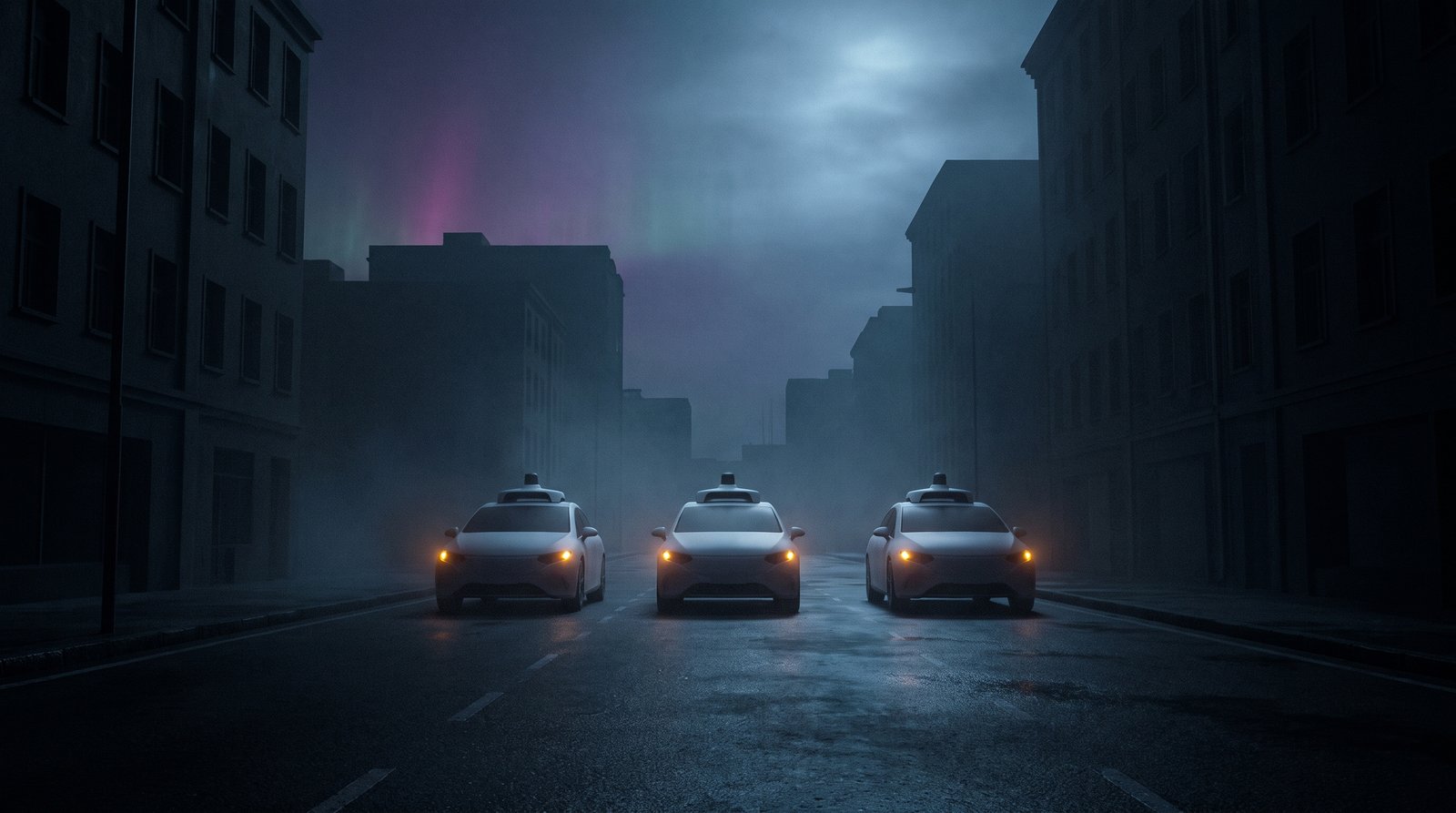
On July 18, 2026, San Francisco served up one of those uncomfortable reminders that autonomous mobility, no matter how sophisticated, remains tethered to infrastructure that hasn't been seriously updated in decades. An electrical outage across parts of the city forced Waymo to pause its robotaxi service for approximately one hour, leaving users stranded, ride requests unanswered, and the app showing zero availability in zones where dozens of vehicles normally circulate. The company later confirmed that service resumed without further incident — but the episode raises questions that go well beyond a sixty-minute disruption.
Not the First Time, and That's the Problem
What makes this incident more than a footnote is the context: this is not the first time a power outage has brought Waymo's San Francisco service to a halt. The city has a historically complicated relationship with its electrical grid. PG&E, the utility that operates most of that infrastructure, has been the protagonist of massive blackouts, fires linked to its transmission lines, and nine-figure fines over the past several years. The fact that a technology sold as the future of urban transportation is this vulnerable to twentieth-century infrastructure failures is, at minimum, a considerable irony.
Waymo operates in San Francisco with an all-electric fleet that depends on constant connectivity to communicate with central servers, receive real-time map updates, and coordinate routing. When power fails in critical zones — whether at local data centers, network repeaters, or the hubs where vehicles are staged — the system has no analog fallback. There is no human dispatcher calling over the radio. There is no driver deciding to improvise. The vehicle simply stops accepting rides, or stops entirely.
The Systemic Fragility Behind the Algorithm
This is where the analysis gets interesting. The dominant narrative around autonomous vehicles frames them as resilient systems: no fatigue, no distraction, capable of processing millions of variables per second. Under normal conditions, that's accurate. But "normal conditions" is precisely what a power outage is not.
The dependency on real-time connectivity is the Achilles' heel that AV manufacturers rarely discuss in investor presentations. Tesla sidesteps it with its onboard processing argument. Waymo, whose operational model is more centralized, is more transparent about the fact that its vehicles need constant cloud communication to perform optimally. The problem is that "optimal" and "functional" are not the same thing — and when service goes down for an hour in a city where thousands of people rely on it as daily transportation, the gap between those two concepts becomes very concrete.
The question Waymo needs to answer — not for the press, but for regulators and for its users — is how much genuine autonomy its vehicles have when connectivity fails. Can they complete a trip already in progress? Can they navigate independently to a safe stopping point? Or do they simply freeze? The answer to those questions determines whether we're talking about a mature system or a very expensive prototype with good PR.
San Francisco as Laboratory and as Mirror
San Francisco remains the most important testing ground for autonomous mobility in the world. Waymo has been operating there for years, accumulating millions of miles, navigating the chaos of Mission District streets and the overhead cables in Castro. That experience is genuinely valuable. But the city is also a mirror that reflects the model's limitations: aging electrical infrastructure, unequal access to technology, and regulatory pressure that doesn't disappear.
The July 18 outage is not a catastrophe. One hour of interrupted service is not the same as a fatal accident or a massive software failure. But it is exactly the kind of event that accumulates skepticism among users who are no longer sure they can count on a robotaxi to get them to the airport or to work on time. Trust in autonomous systems is not built solely through accident-free miles — it is also built through resilience against the mundane: the blackouts, the storms, the network failures that arrive without warning.
Waymo has the resources, the engineering talent, and the regulatory momentum to solve this. The question is whether they will treat it as an engineering priority or as a communications problem. Because if the answer continues to be a press statement saying service "has resumed," without explaining what changed to prevent recurrence, the next hour of downtime will arrive carrying far more reputational weight than this one did.