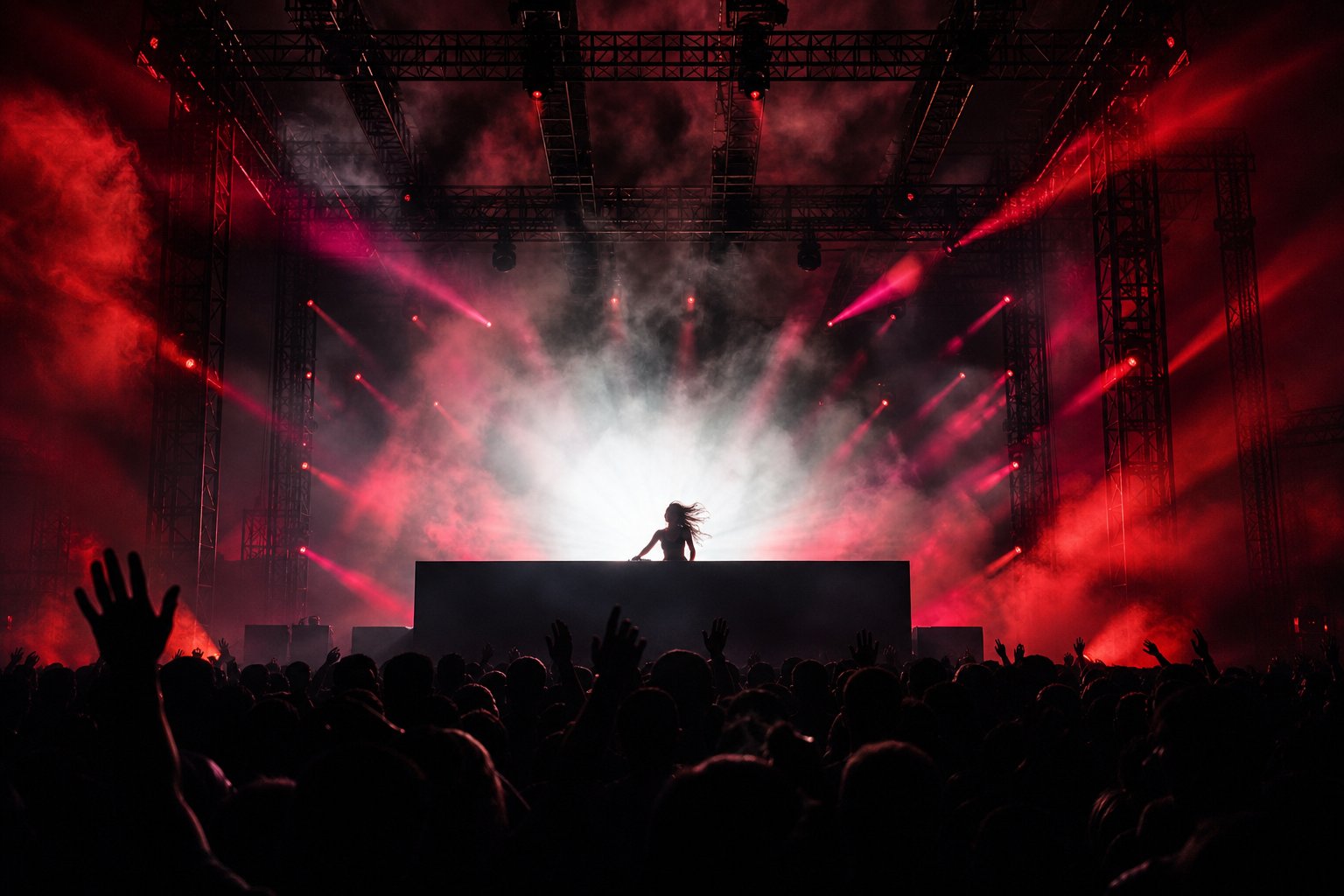
Fifteen years after stepping onto the most important stage of the world's largest electronic music festival for the first time, Charlotte de Witte returns to the Tomorrowland 2026 Mainstage, and she does so exactly the way someone of her caliber should: with no prior announcement, no marketing campaign, none of the usual machinery of staggered reveals that festivals use to inflate hype. The Belgian artist appears as a surprise act in the Sunday evening slot, the space Tomorrowland historically reserves for the moments people will still be talking about years later. That is not a coincidence. It is a statement.
The Weight of a Return Like This
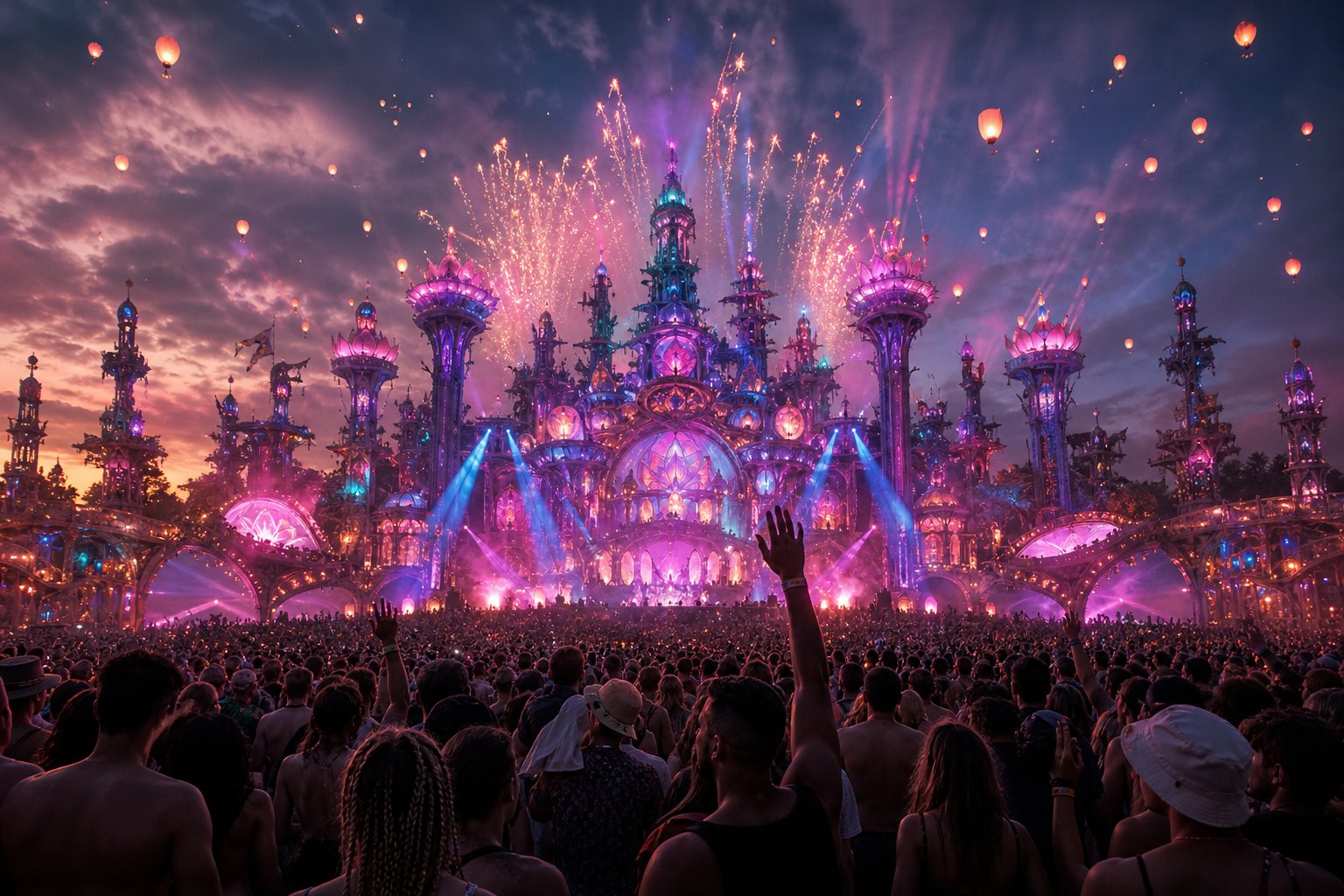
You have to understand what the Tomorrowland Mainstage actually means to put this news in proper perspective. It is not simply "the big stage." It is the stage that streams simultaneously to millions of people around the world, the one that defines which artists belong to the global conversation of the moment and which ones remain regional footnotes. When Tomorrowland places someone on that stage, it is making an editorial judgment about the state of dance music worldwide. And in 2026, with techno living through one of its highest-visibility mainstream cycles since the nineties, putting Charlotte de Witte in that slot is not a nostalgic gesture. It is an acknowledgment that she remains one of the most relevant voices in the genre, full stop.
De Witte made her Tomorrowland debut fifteen years ago, when she was largely unknown outside European techno circles. Since then she has built one of the most solid and coherent projects in the underground: her KNTXT label, her four-hour sets that became reference points, her consistent presence in DJ Mag rankings without that ever seeming to push her toward softening her sound for broader audiences. That kind of consistency is rare. And it is exactly what gives this Mainstage return real weight rather than making it feel like corporate nostalgia.
Techno on the Mainstage: The Paradox Nobody Wants to Name
Here is the uncomfortable angle most coverage is going to skip past: putting techno on the Tomorrowland Mainstage in 2026 is simultaneously the most logical decision in the world and the most contradictory one. Logical because techno is arguably the subgenre with the most cultural momentum right now, with an entire generation of younger listeners who discovered it through digital platforms and want to see it in large-scale contexts. Contradictory because the Tomorrowland Mainstage is, by definition, the symbol of everything original techno claimed to reject: grandiose production, massive audiences, visual spectacle over sonic substance, the festival as consumer product rather than community space.
Charlotte de Witte is not unfamiliar with this tension. She has played enormous contexts before, including her already-legendary set at the Brussels Atomium and appearances at comparable festival scales. But the Tomorrowland Mainstage carries a specific energy unlike any other: the crowd that fills that space is heterogeneous in an almost unique way, a mix of techno heads who know exactly what they are about to hear and festivalgoers who came primarily for the spectacle and are going to discover the genre in real time. How De Witte navigates that dynamic, what decisions she makes in her selection for that Sunday night, will say a great deal about where she stands in her relationship with massiveness.
What This Reveals About Tomorrowland in 2026
Tomorrowland has spent several years playing with the idea of giving more space to techno and techno-adjacent sounds in its programming, but always with a certain caution, always balancing against more commercially obvious names. The fact that in 2026 they reserve the Sunday Mainstage surprise slot for an artist whose work is, fundamentally, dark and uncompromising techno, suggests the organization is reading the zeitgeist with more precision than its critics usually give them credit for. Or, in the best case, that they are willing to bet on something that is not the safe option.
The Sunday surprise slot has memorable precedents in the festival's history. Filling it with De Witte in this particular year, when techno sits at the center of the global dance music cultural conversation, is a move with more layers than it appears to have at first glance. This is not just booking. It is positioning. And for those of us who follow this ecosystem closely, it is one of the most interesting programming announcements of the festival year.
The set remains to be seen. But the expectation is already justified.