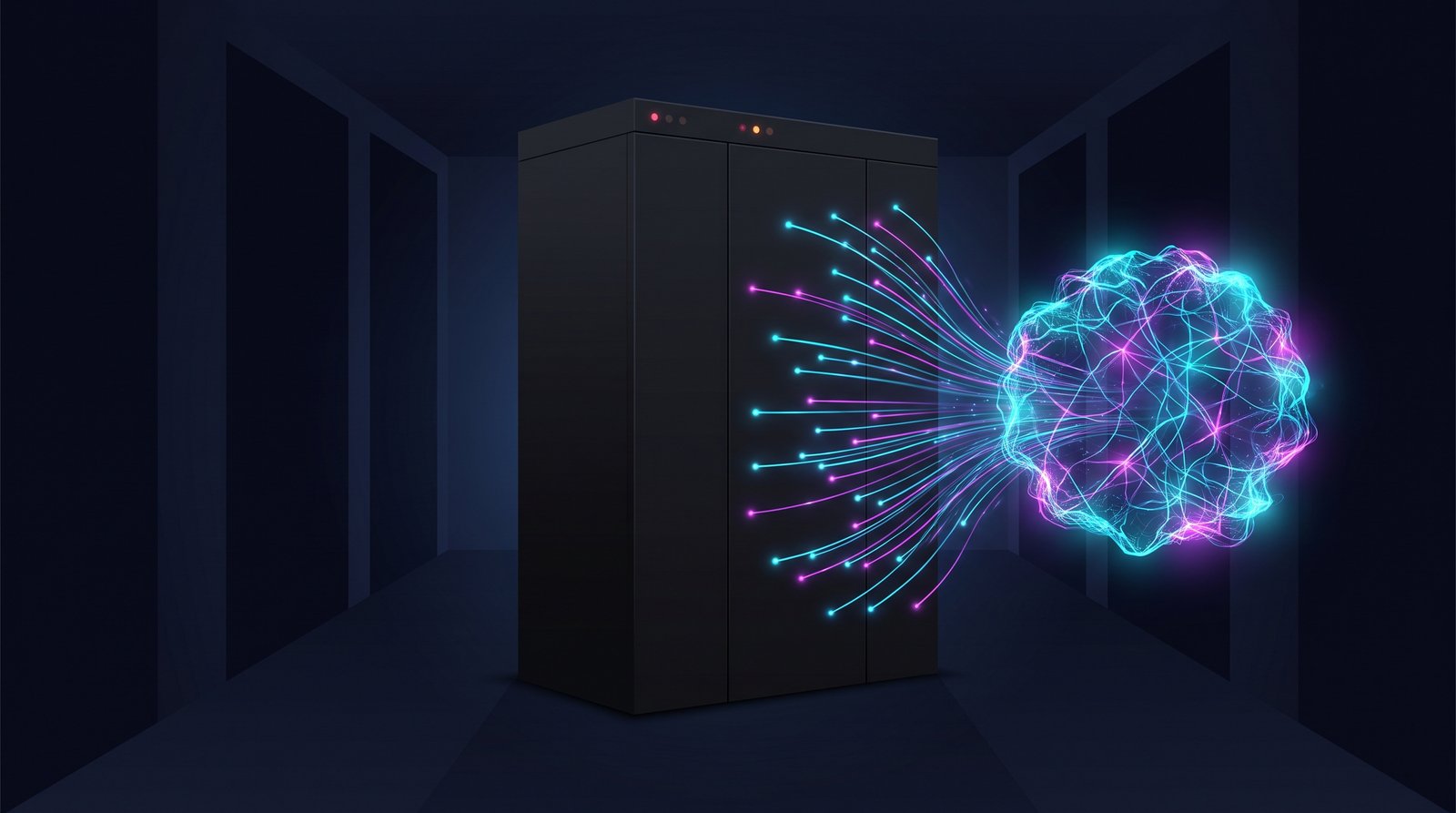
Last week, IBM delivered one of the most talked-about stock scares of the year in the tech sector: shares dropped sharply after the company warned of weaker-than-expected mainframe sales. CEO Arvind Krishna's official explanation was, in short, that artificial intelligence ate into the corporate budgets that would normally have funded big iron refresh cycles. Not that the mainframe is dead, he insisted, just temporarily on pause. That sounds reasonable. It also sounds exactly like what any executive would say while trying to contain the damage before a quarterly earnings call.

IBM's argument isn't without merit. What's happening inside corporate IT departments in 2026 is real: CFOs are redirecting capital toward AI infrastructure — GPUs, inference clusters, cloud agreements with AWS, Azure, and Google — and that inevitably compresses traditional hardware refresh cycles. A z-Series mainframe isn't an Amazon purchase: we're talking about contracts that can exceed $20 million, with decision cycles running 18 to 36 months. When corporate budgets tighten, that kind of spending is the first to enter wait-and-see mode.
But there's a more uncomfortable layer to this analysis that IBM prefers not to address head-on: the "AI temporarily redirected the budget" narrative assumes that budget is coming back. And that's not guaranteed. Workloads that historically lived on mainframe — high-volume banking transaction processing, insurance settlement, large-scale health records — are being evaluated with fresh eyes by systems architects who would never before have considered moving them. Not because the cloud is cheaper (sometimes it isn't), but because the AI they want to integrate lives there.
IBM has spent years building its own coexistence narrative: the mainframe as an on-premise AI platform, with its Telum chips and model integration via watsonx. The bet is smart on paper. The problem is that "smart on paper" and "what CIOs actually buy under digital transformation pressure" are two different universes. When IBM's CEO comes out to say AI isn't killing the mainframe, what he's really saying is: not yet, and we trust it won't. That's a statement of faith, not a technical guarantee.
What we do know for certain is that the quarter was bad enough to move the stock price significantly — and for a 150-year-old company with an installed base in virtually every G20 bank, that's a signal worth paying attention to. IBM is not a startup designed to lose money. When its infrastructure business stumbles, Wall Street analysts get nervous for good reason.
There's an angle that gets little coverage in the mainstream treatment of this story: the mainframe as critical infrastructure has one characteristic that makes it nearly irreplaceable in the short term — its absurd reliability. IBM's z16 systems deliver 99.9999% availability (six nines), something no commodity cloud stack can contractually guarantee for mission-critical workloads. That's what keeps the mainframe alive in 2026, not veteran IT team nostalgia.
The most honest diagnosis is this: IBM is caught in a budget compression cycle affecting the entire enterprise hardware industry, compounded by the fact that generative AI has become the number-one technology spending priority across virtually every regulated industry. That hurts now. If IBM can successfully position the mainframe as the platform where sovereign, regulated AI runs — rather than competing against public cloud — it has a story worth telling. But it needs to tell that story faster, because budgets that are on pause today don't wait forever.
The question nobody wanted to ask directly on the earnings call is the most important one: if AI temporarily redirected the budget, when exactly does it come back, and in what amount? Until IBM has a concrete answer to that, "temporarily" is just a four-syllable word for "we don't know."