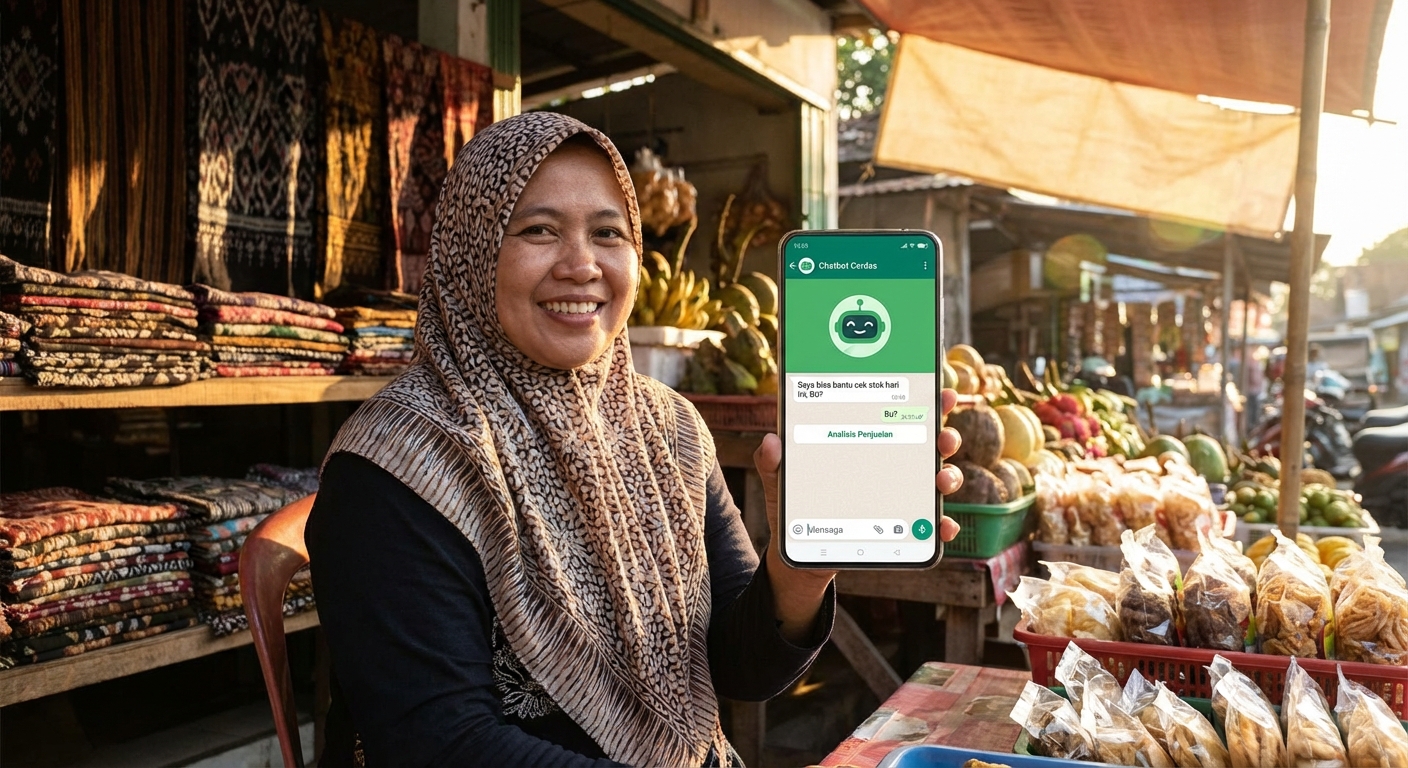
Meta just took a step many of us saw coming: it launched an artificial intelligence agent integrated directly into WhatsApp in Indonesia, available for free to small and medium-sized businesses. The agent runs on Llama, Meta's open language model, and allows businesses to answer customer questions, handle frequently asked questions, and automate conversations without needing to hire a developer or pay for a third-party platform.
This isn't a toy chatbot or a proof of concept buried in a settings menu nobody finds. It's a feature Meta is actively pushing as part of its bet to monetize WhatsApp Business without charging the end user directly — at least for now. The underlying business model is something else entirely: the more businesses depend on WhatsApp as their customer service and sales channel, the more control Meta has over that commercial infrastructure. Free today doesn't mean free forever, but that's a conversation for another time.
Why Indonesia first
Indonesia isn't a random choice. It's the fourth most populous country in the world, with over 270 million inhabitants, extremely high smartphone penetration, and an economy where SMBs account for more than 60% of GDP. WhatsApp is already the dominant messaging app, and a significant portion of informal commerce happens over chat. It's the perfect laboratory to test something like this at scale.
This is what Meta does systematically: it launches first in markets with high WhatsApp adoption and favorable conditions, collects data, iterates, and then expands. India, Brazil, and Indonesia are their three favorite pilot markets for this kind of experiment. It's not coincidence — it's deliberate strategy. These markets share one thing in common: millions of small businesses that don't have the budget for enterprise solutions but do have WhatsApp open all day long.
Indonesia also has something few people mention: a young entrepreneurial class, very active on social media and with a high tolerance for trying new digital tools. If the agent works there, it works anywhere.
What the agent can do
Based on available information, the agent can:
- Answer frequently asked questions configured by the business
- Provide information about products or services
- Manage the start of conversations and qualify leads
- Escalate to a human when it doesn't know how to respond
- Operate on the same WhatsApp Business number the business already uses
The most relevant part is that it doesn't require complex technical integration. Meta positions it as something any business owner can configure from the app, without knowing how to code. That's exactly what the SMB market needs: zero friction to get started. Not a 40-step tutorial, not an API to connect, not a developer in the loop. You open the app, configure some responses, and the agent starts working.
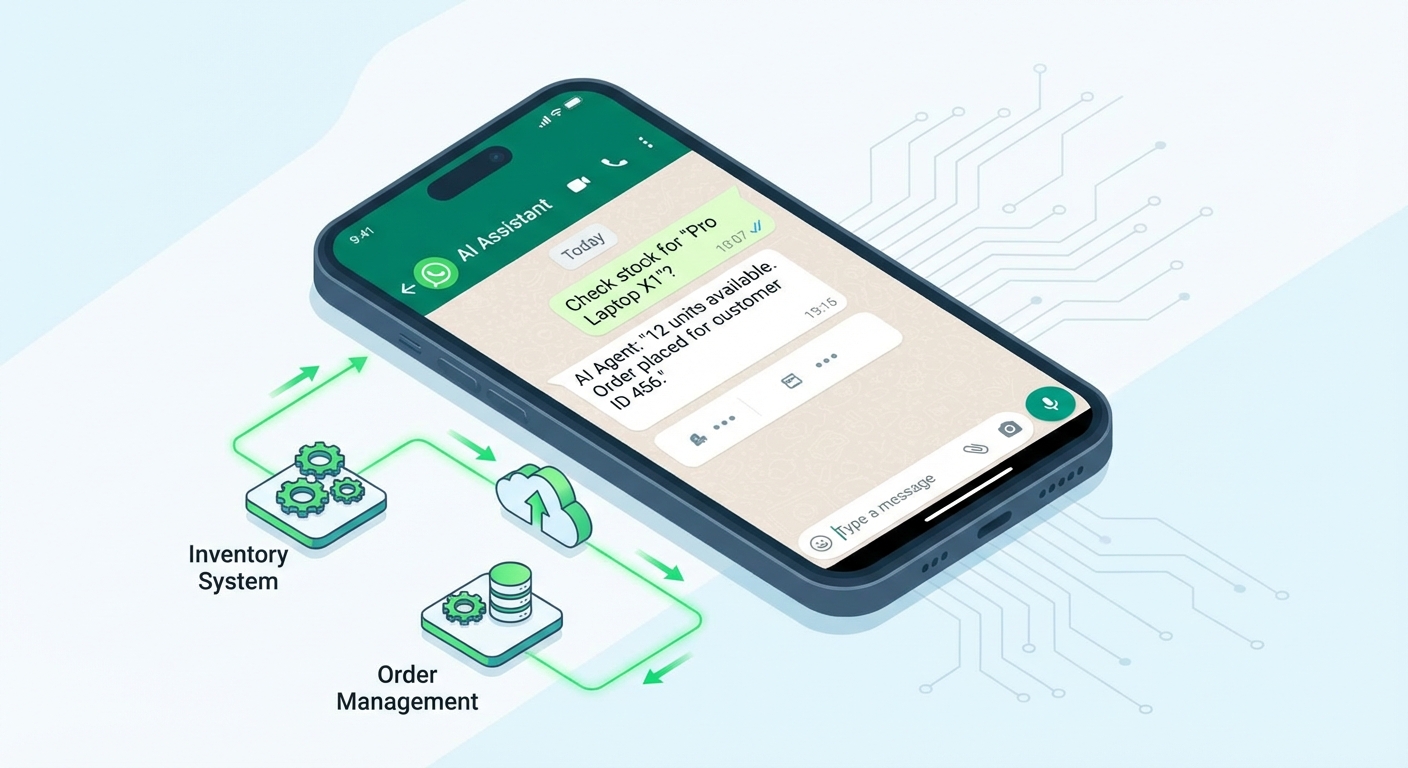
That said, let's be honest about what that implies: an agent without technical integration is also an agent with limited capabilities. It can answer what you programmed it to say, but it can't check your real-time inventory, process a payment, access your CRM, or update an order status. For that you still need something more sophisticated. And that's exactly where the third-party solutions ecosystem maintains its reason for existing.
The key question: when does it reach Mexico?
Mexico has everything it needs to be one of the next markets: high WhatsApp penetration, millions of SMBs already using WhatsApp Business as a sales channel, and an informal economy where chat is the primary point of contact with customers.
A conservative estimate is that this type of tool will reach Latin America within the next 12 to 18 months, probably starting with Brazil and Mexico. Meta already has a strong commercial presence in both countries and the conditions are almost identical to Indonesia.
Brazil goes first because of market size and because Meta has been testing payment and commerce features in WhatsApp there for years. Mexico comes right after. We have over 90 million active WhatsApp users, a culture of customer service by message that is already completely normalized, and millions of businesses that literally live in their WhatsApp Business inbox. The fit is natural.
What this means for the ecosystem
For those of us who work with WhatsApp automation and bots, this is a clear signal: the market is moving toward more accessible and native tools. The solutions that survive will be the ones that offer something Meta's agent can't provide by default — deep customization, integrations with internal systems, complex business logic, or more sophisticated experiences.
Put another way: if your value proposition as an automation provider is simply "I'll set up a bot on WhatsApp for you," you have a problem. Because Meta just made that free. But if your proposition is connecting that bot to the client's ERP, their e-commerce platform, their ticketing system, their customer database, or building conversation flows that reflect real and complex business logic — that's not something Meta is going to solve with a basic configuration agent, at least not in the short term.
The space doesn't disappear, it segments. Smaller businesses with basic needs will migrate to Meta's native agent. Businesses with more complex operations will continue to need custom solutions. And that is an opportunity. The market cleans itself up: out go the clients who were never going to pay what real work is worth, and what remains are those who understand that well-built automation has a price and a measurable return.
That's not a threat. It's natural selection that benefits the entire ecosystem.