Linz: the world capital of electronic art and the second concert that didn't happen either
Today was supposed to be Gigi D'Agostino's second night in Austria: June 5 at the TipsArena in Linz. It was the other half of the plan. And, as you know, it got postponed too: the promoter moved it to December 3, 2026 because, they explained, it was the only free date given all the football matches at the stadium next door. For someone coming from Mexico, December 3 is the same as never.
So I arrived in Linz without a concert and with my mood on the floor. That's why I barely have any photos of my own from this city; the images in this post come from Wikimedia Commons, credited to their authors. But Linz deserves a few lines, because if there's one city in Austria that should matter to anyone who lives from electronic music, it's this one.
Photo: Walter Isack(Isiwal) · CC BY-SA 3.0 · Wikimedia Commons
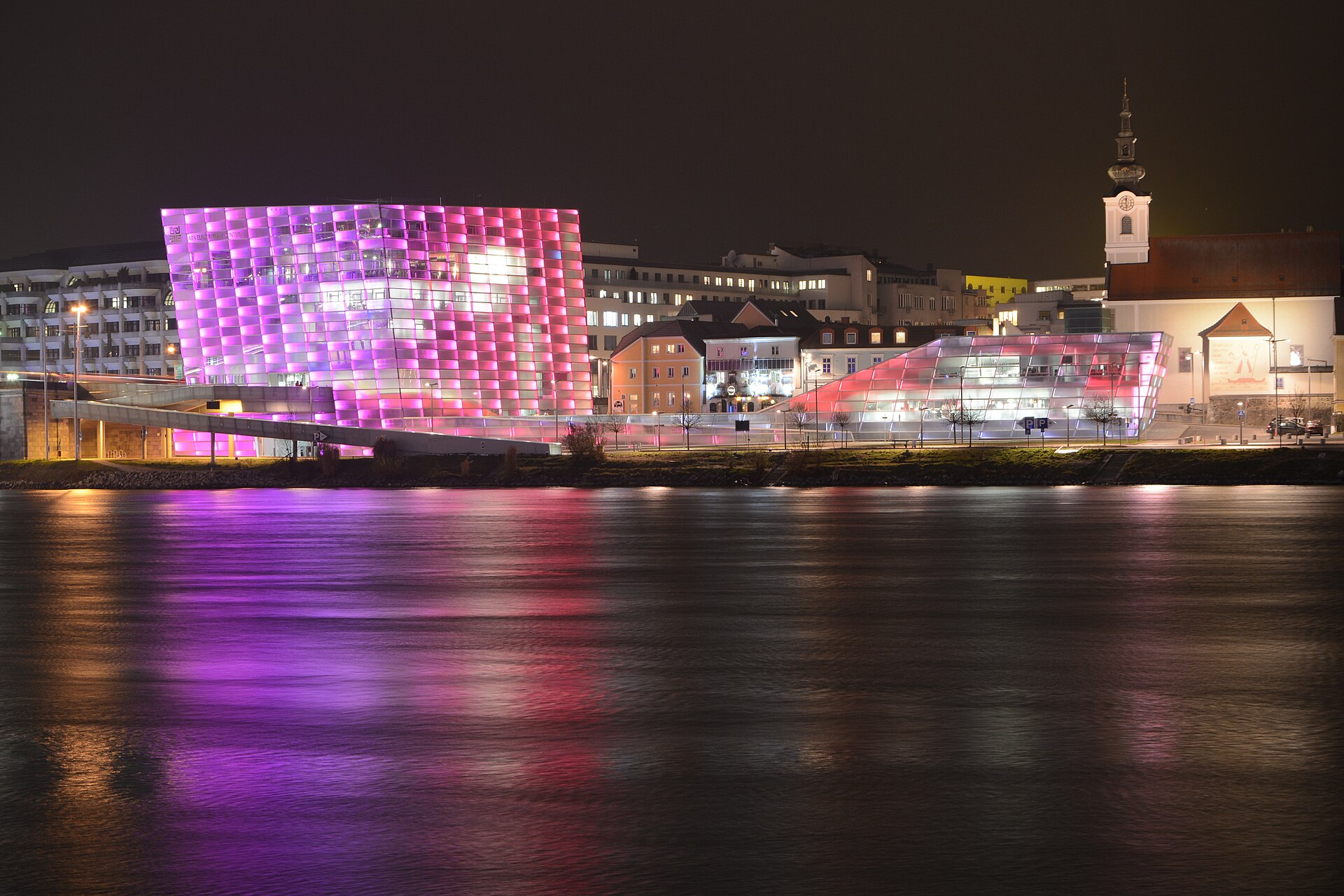
Ars Electronica was born in Linz in 1979: a festival about the relationship between art, technology and society, at a time when most people had never even seen a personal computer. In 1987 they created the Prix Ars Electronica, the first international competition devoted exclusively to digital media, whose award is the Golden Nica. The Ars Electronica Center is that glass cube on the Danube with an LED façade that changes color at night; it opened in 1996 and was expanded in 2009, when Linz was European Capital of Culture. Since 2014, Linz has been a UNESCO City of Media Arts. For someone who works in electronic music and technology, this is almost a pilgrimage site.
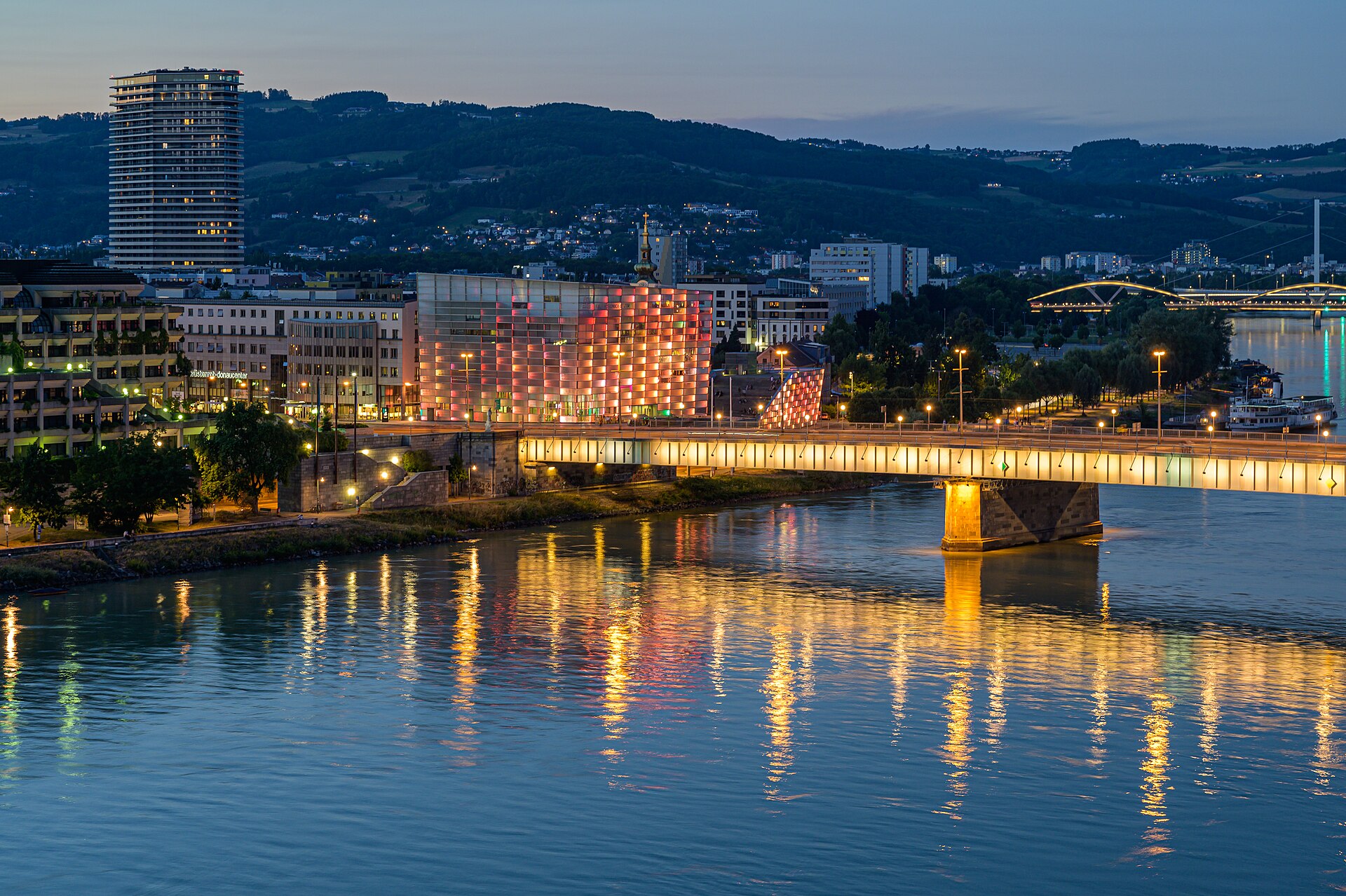
Photo: Isiwal · CC BY-SA 4.0 · Wikimedia Commons
Another fact I loved: Linz has the Linzer Klangwolke, the "cloud of sound". The first one was in 1979, with Bruckner's Eighth Symphony projected over the city and the Danube for a hundred thousand people. Open-air music at city scale, almost fifty years ago. And one more for the DJs: Parov Stelar, the pioneer of electro swing, was born in Linz in 1974.
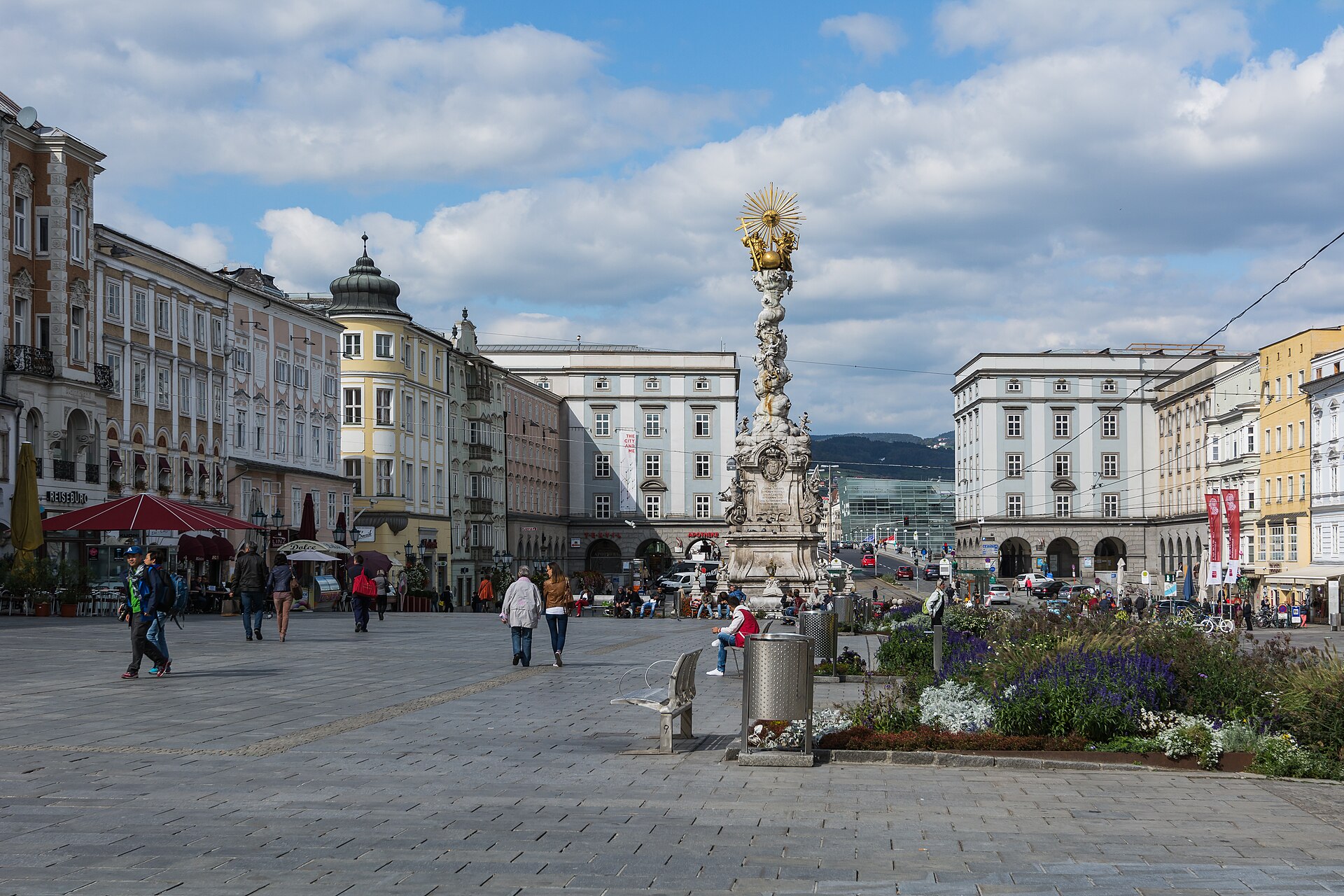
Photo: Isiwal · CC BY-SA 4.0 · Wikimedia Commons
The heart of the city is the Hauptplatz, a baroque square of more than 13,000 square meters, one of the largest enclosed squares in Europe. In the middle stands the Dreifaltigkeitssäule, the Holy Trinity Column, from 1723, built in gratitude for surviving the war of 1704, the fire of 1712 and the plague of 1713. In Austria, apparently, every tragedy you survive earns a column. I should build one for surviving this trip.
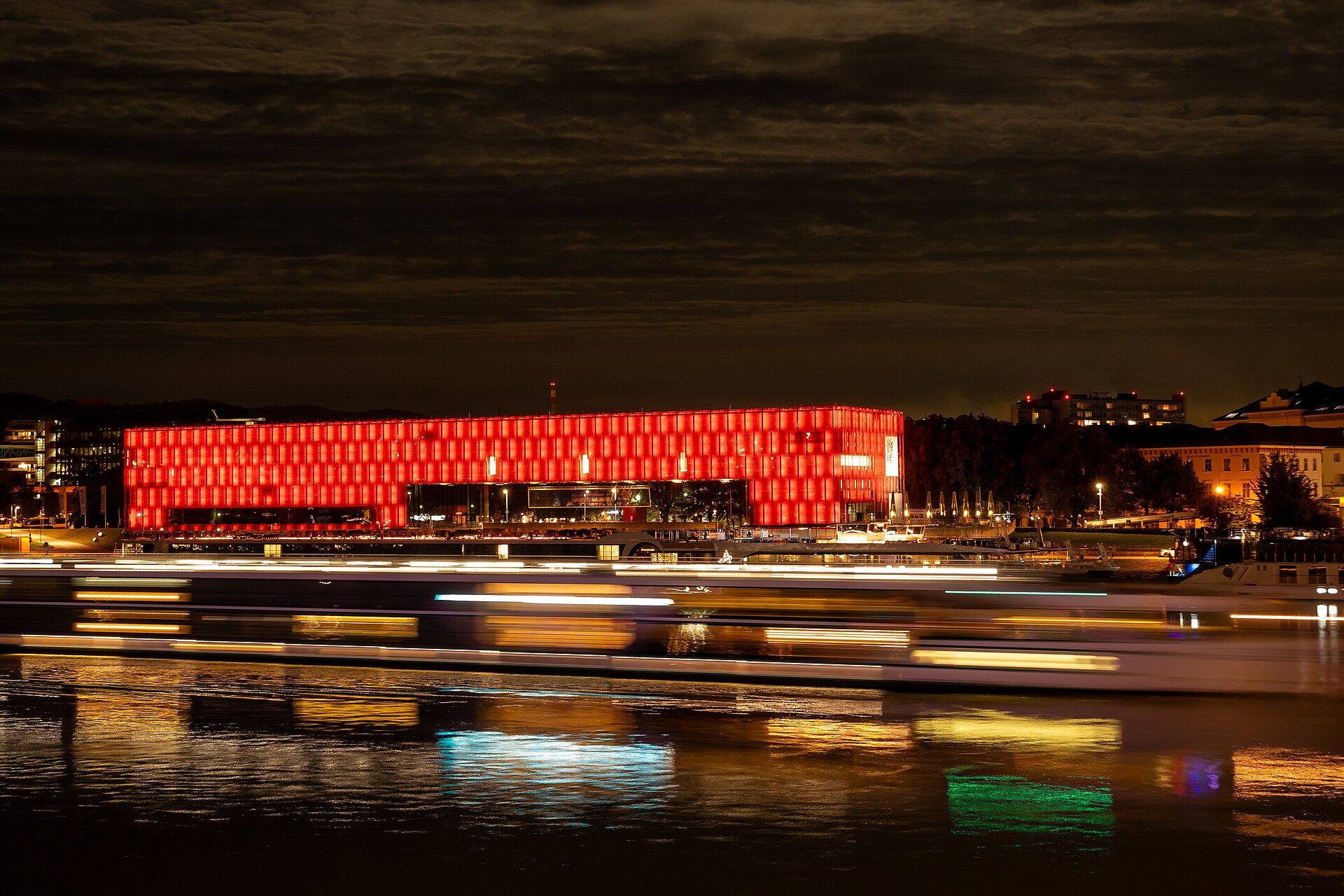
Photo: Matti Blume · CC BY-SA 4.0 · Wikimedia Commons
By the river is the Lentos, the modern art museum: a 130-meter glass box that lights up in colors at night and opened in 2003. And above the city, the Pöstlingberg, with its pilgrimage church and a mountain tram that has been running since 1898 and once made the Guinness Book as one of the steepest adhesion railways in the world.
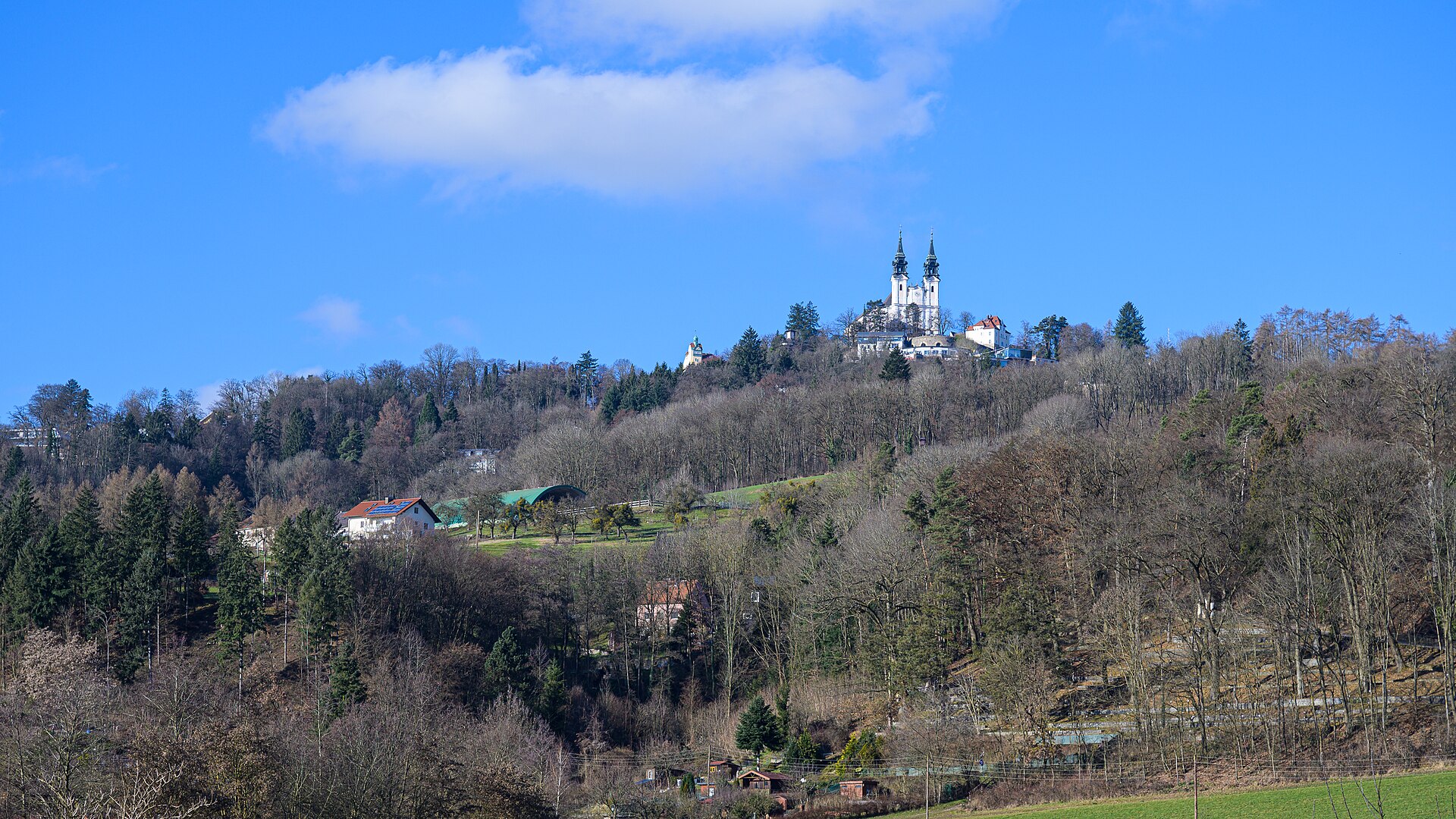
Photo: Isiwal · CC BY-SA 4.0 · Wikimedia Commons
Linz has serious history too: Anton Bruckner was the cathedral organist from 1855 to 1868, and Johannes Kepler lived here and published Harmonices Mundi in 1619, the book where his third law of planetary motion appears. An astronomer searching for the harmony of the universe in the same city that centuries later would become the capital of electronic art. Something about that makes sense.
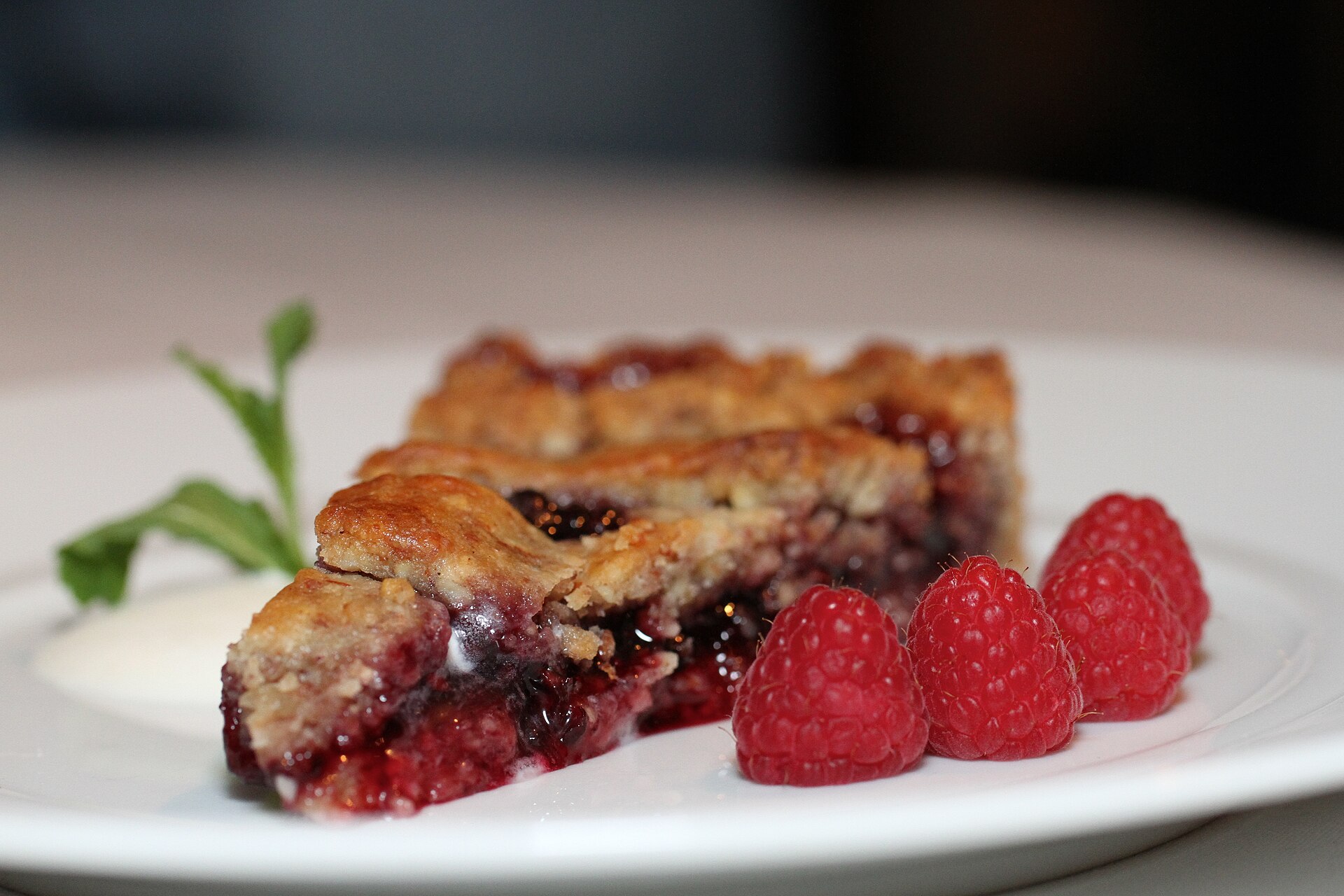
Photo: Hungry Dudes · CC BY 2.0 · Wikimedia Commons
And to finish on a sweet note: the Linzer Torte. Its oldest known recipe dates from 1653, making it the oldest cake recipe in the world named after a city. Almond or hazelnut dough, redcurrant or raspberry jam, and that lattice on top. In a country where savory food comes loaded with caraway, paprika and seasoning, the pastry is in another league.
Linz is a city I would have loved to experience in a different mood. With a concert, with energy, walking into Ars Electronica with a clear head. It's still pending. Tomorrow, Vienna, the last stop in Austria.

Me by the Danube in Linz
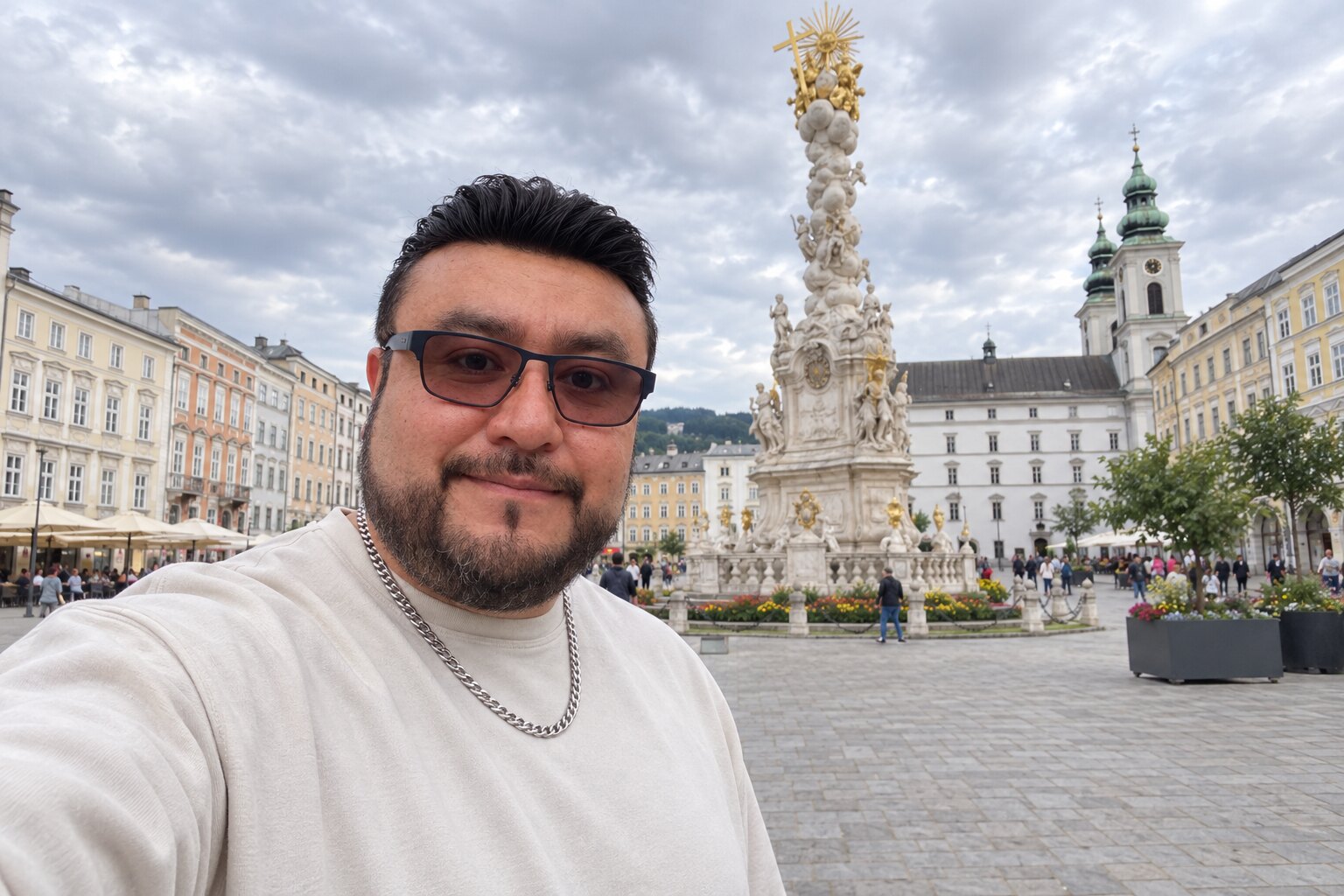
Me at Linz's Hauptplatz